Hello there, reader. You know, I almost typed, “welcome, reader”, and then decided to say hello instead. But I have said welcome in the past, and sometimes it does feel like I’m welcoming you to a five-minute break from your day for you to peruse through interesting things. So, hello, and also welcome.
I skipped last weekend because there was a lot going on, and also because I simply didn’t have ten articles! Even yesterday, I sat down to write the newsletter, but found out I only had eight articles I was happy with sharing. That’s strange, because usually when I’m in the reading rhythm, I have at least fifteen to choose from. Anyhow, life sometimes throws curveballs at us, and that is that.
I don’t have much else to say this week, except that I am very happy about a new cast iron pan I have that fits inside my tiny oven and I can finally, finally , bake focaccia again with the crispy bottom I love. It’s one of my favourite memories from my PhD. So. Focaccia aside, do enjoy this list, I think it’s a nice one this week.
If you got this from a friend and want to subscribe, here’s the link. Also, if any of the links are paywalled and if you don’t want to pay for a subscription, try opening the link in incognito mode in your browser. This works if the website has a “soft” paywall. If that doesn’t work, you can access the website using a different browser on the same device, or use a different device altogether. Another, slightly involved, method is to try to disable JavaScript and reload the page. This works on some websites for me.
1. Plating Peru’s Megadiversity at the World’s Best Restaurant - Atmos
Central currently holds the title for the world’s best restaurant, and at its core it is a platform for showcasing the “megadiversity” of Peru’s agriculture and ingredients. There are two things about it that are really cool. The first is that each dish is named by an altitude, and features crops and varieties that are tied to a certain place at that altitude. The second thing is that the restaurant operates in parallel with a research institute, Mater Iniciativa, which serves as the restaurant’s partner in culinary research. The duo is run by a brother-sister duo, which I think is also so cool. I would love to go here some day.

2. The Artist Who Collaborates with Ants - The New Yorker (soft paywalled)
Catherine Chambers is so cool! This is one of her videos, a 4 minute film called “We Rule”.
Chalmers wanted to work with the ants, but didn’t know how. “I’m interested in that place where nature meets culture,” she said. The more complicated the interface, the better: around this time, she was exploring humans’ relationship with cockroaches. But, by comparison, the ants seemed almost too natural to work with artistically. “They’re of the forest,” she said. “We think of them as the other.” What would it mean to make art about our relationship with such creatures?
3. The key to depression, obesity, alcoholism – and more? Why the vagus nerve is so exciting to scientists - The Guardian
I think I’ve shared a few articles some time ago about the vagus nerve. Well, here is another one from August this year and it’s a bit of a summary of some of the research as well as practical experiments people have been doing on themselves, exploring how stimulating their vagus nerve helps with a bunch of things like stress, being calm, sleep, and bigger things too like the things mentioned in the title. It’s an interesting world out there (or rather, inside our bodies).
4. Complexity Theory’s 50-Year Journey to the Limits of Knowledge - Quanta Magazine
“How hard is it to prove that problems are hard to solve? Meta-complexity theorists have been asking questions like this for decades. A string of recent results has started to deliver answers.”
During my PhD, part of my training was in quantum computing, which is inherently tied to complexity theory. Complexity theory refers to a branch of science that is interested in finding the best (and sometimes worst) ways to solve algorithmic problems, and what that reveals about the things we can compute efficiently and the things we can’t. There is another field, though, meta-complexity, which instead of investigating specific algorithms or complexity classes, asks bigger picture questions like, “why is it so hard to prove that some computational problems are hard to solve?”. This is a nice albeit technical summary of some recent major results, and gives me some FOMO about stepping out of that world.
5. Citron: The exquisite fruit that brings rabbis - BBC
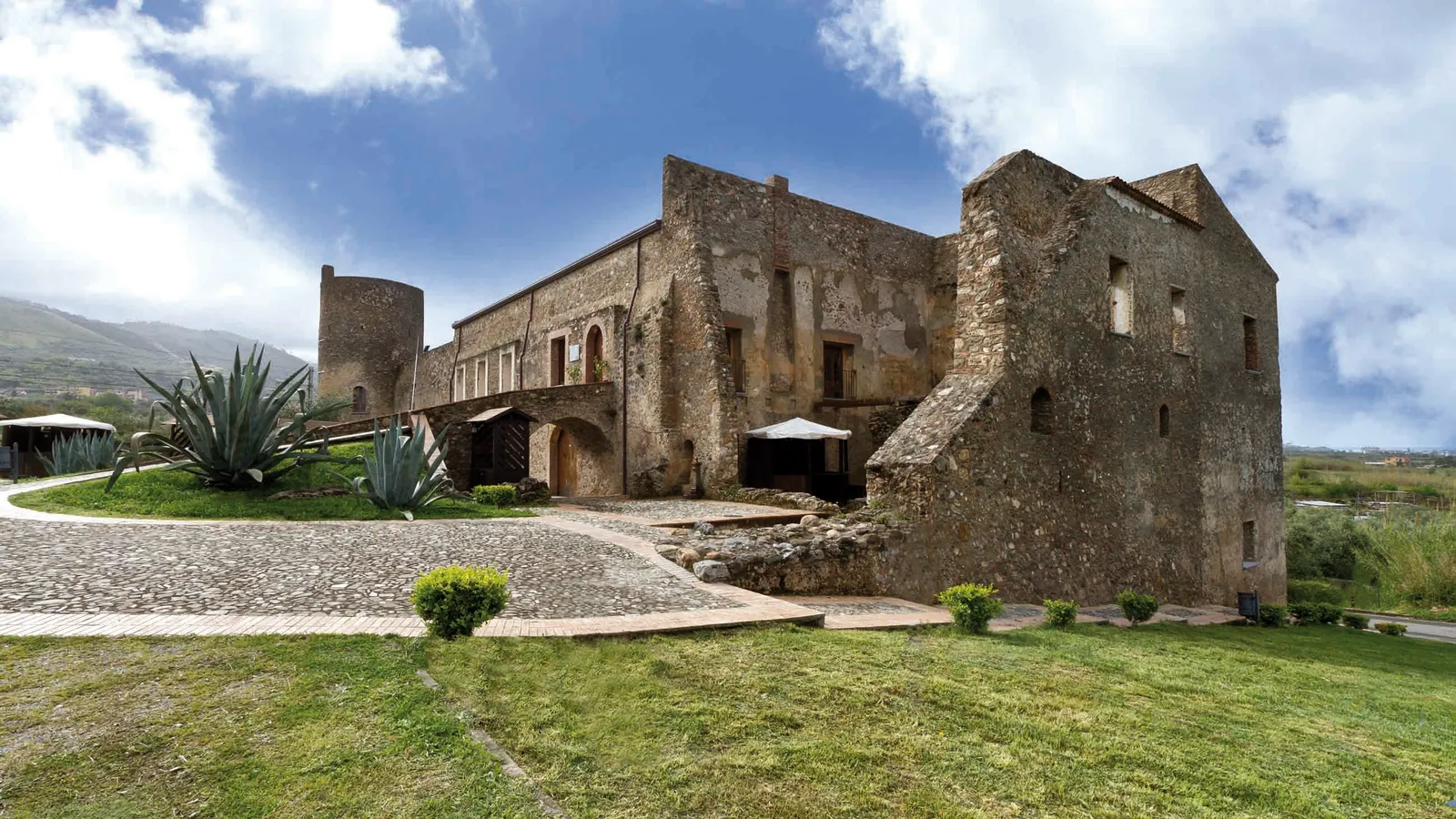
Fascinating story of Italian citrons being grown and then exported to Hassidic Jew families across the world.
6. Meals for One - Longreads
A friend sent me this some time ago, and well, wow, both of us just got around to reading it now. No better way to celebrate this coincidence than to include it in the newsletter. I have often cooked meals for just myself, and while it is frustrating at times, I think that’s because of the conditioning I’ve had that it’s a bit of a failing as well as the sheer practical inefficiency of cooking for one person versus four. Sharanya Deepak here writes about her journey getting to the point of cooking for herself and also enjoying it. It’s nice. It goes well with Diksha Basu’s Finding Words in the Kitchen (Or: How I Stopped Hating Myself and Started Cooking) (Kable #317) and Meera Ganapathi’s Trial with Fire in the Kitchen (Kable #306).
The kitchen is a memory keeper, crowded with recipes and prompts from the people of my life. But what is mine is the choice to get it right or fuck it up. When I cook for myself, I am “underwater” in a way. I am genderless, childless, a person without any hinges. I am, fleetingly, nobody, or whoever I want to be.
7. The strange, secretive world of North Korean science fiction - Ars Technica
It’s not a big surprise that North Korean science fiction is unheard of in the West, but this article/review/historical perspective made me want to explore some of its major hits. It is, of course, intricately tied to state-backed censorship, which makes it a bit one-dimensional but also makes it more interesting in its own way.
8. The Art of Omission - The New Yorker (soft paywalled)
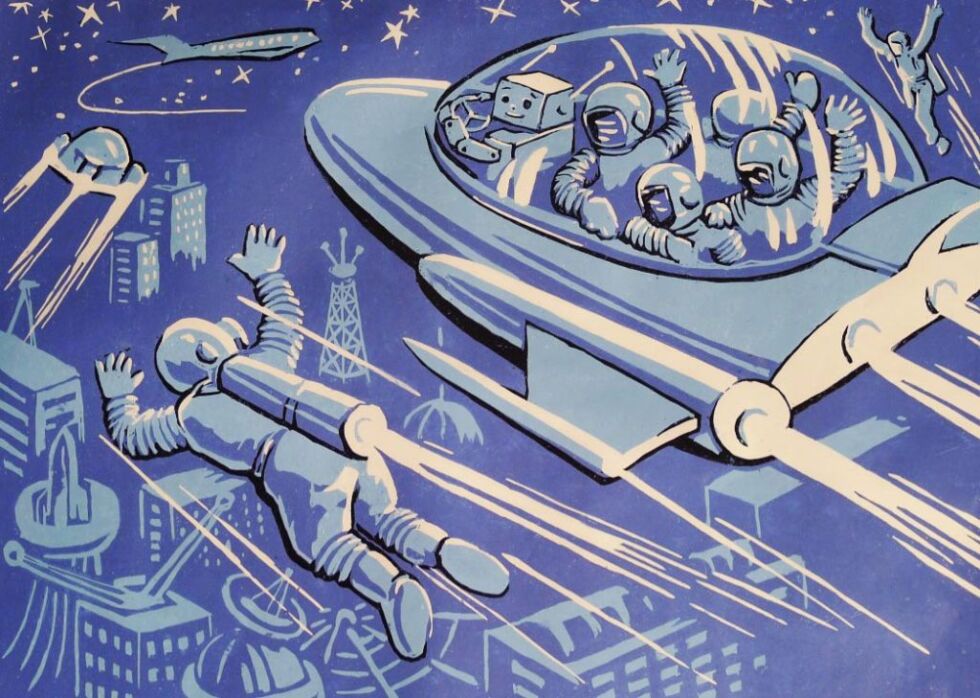
Phew. Well, if you’re a medium- to long-term reader of the newsletter, you know I’m a huge fan of John McPhee. Here’s a 2015 essay from him where he reflects on his training and writing style, and how he’s been taught to omit things and to pare things down. If you’ve read some of McPhee’s longform work (like some of his books), you’ll probably chuckle at this. There are so many details in his work that sometimes it feels like all of it can be omitted. But there is a magic to the way he does it.
9. Salt, Sugar, Water, Zinc: How Scientists Learned to Treat the 20th Century’s Biggest Killer of Children - Asterisk Magazine
A long and comprehensive history of oral rehydration solution, or ORS. What I learned by reading this is that our body is not capable of absorbing salts when ingested orally when dehydrated. This is why diseases like cholera would kill simply by dehydrating the patient. However… we can absorb those salts if they come along with glucose, and if the entire solution is formulated to be isotonic, i.e. it plays well with the sugar and salt in our bloodstream. Such a simple idea.. but it was so hard to find because we didn’t know of the way our body co-absorbs salt and glucose together via our gut.
10. Hunger - Fifty Two
It’s been a long time since I shared a piece by Fifty Two. Andrew Fidel Fernando (who I know better as a correspondent for the cricket blog Cricinfo) writes about the harrowing 2022 that Sri Lanka had, with spiraling crises and out-of-control hunger and fuel shortages. It’s pretty intense.