Hello there, reader, and welcome to another mid-week issue of Kat’s Kable, your favourite internet newsletter. As is the case with the midweek issues, I am essentially rushing against time to get this completed because I have a lunch to pack and work to get to! So. Not a whole lot to say this week. But you will enjoy the articles nonetheless? Please tell me if you did :)
If you got this from a friend and want to subscribe, here’s the link. Also, if any of the links are paywalled and if you don’t want to pay for a subscription, try opening the link in incognito mode in your browser. This works if the website has a “soft” paywall. If that doesn’t work, you can access the website using a different browser on the same device, or use a different device altogether. Another, slightly involved, method is to try to disable JavaScript and reload the page. This works on some websites for me.
1. Cultivating a state of mind where new ideas are born - Henrik Karlsson’s blog
Karlsson and Johanna Wiberg write about ways people have cultivated their internal and external spaces with the objective of being a fertile ground for new ideas, and what we can learn from their efforts. A significant part of it is being able to sit with difficult concepts, spending quality time by oneself, and having a supportive but not ever-present feedback group. Pretty interesting altogether.
2. Yaar parivaar - Mid-Day Magazine
Neerja Deodhar, whose writing I admire quite a bit, writes about the increasing number of Indians who are rejecting the conventional institution of marriage and co-living, and instead taking up living with friends in a communal setting as a way of providing long-term support for each other. It’s quite cute and nice and honestly very heartening.
3. Can We Make Bicycles Sustainable Again? - Low Tech Magazine
I haven’t liked this article from Low Tech Magazine as much as I did some of their previous ones, such as How to Design a Sailing Ship for the 21st Century? all the way back in issue #277. This particular article is about making bicycles better by using better or lighter materials, making them longer-lasting, and generally looking at the ways bicycles of old were far better engineered than they are now. It’s a European-centric view where bicycles are seen as a competitive and useful urban commute vehicle, but I think we need to see more bicycles on roads in general everywhere.
4. David Chang’s Secret Code to Unleashing the World’s Most Amazing Flavours - WIRED (soft paywalled)
2016 article by David Chang about his philosophy towards creating new dishes at his restaurants–his processes behind it, the reasoning behind highlighting things, the constraints he places on him and his team to come up with something creative, and most interestingly, the idea of salting a dish so it simultaneously feels like it has too little and too much salt while remaining fully committed to both. Which brings me to…
5. Salt taste is surprisingly mysterious - Knowable Magazine
I did not know this, but we have different receptors in our mouths for low salt and high salt. That’s because we have separate mechanisms for figuring out if the food is salted at all (because we need sodium) and for figuring out if it’s too salty (in which case we have to activate mechanisms to manage and flush it out). And the high salt receptors are also tied with the sour and bitter receptors. I suppose with all these facts, one has no choice but to agree both with David Chang and the title of the article: salt taste is surprisingly mysterious.
6. ‘Chef’s Table’ Recap: Jeong Kwan - Eater
This made me immediately want to watch Chef’s Table , which I hope to get around to doing in the next… well, few months. It’s “A gorgeous look at the life of a nun in South Korea who cooks temple cuisine”.

7. How Quantum Physicists Explained Earth’s Oscillating Weather Patterns - Quanta Magazine
The Earth is not a large quantum system, but its major equatorial winds/waves, first observed by Lord Kelvin, can be explained if we borrow terminology and machinery from a type of quantum material called a topological insulator. This is really cool and appeals highly to my nerdy sciencey mind.
Marston suspected there was a connection between geophysical waves and electrons moving through a magnetic field, but he didn’t know where to find it — until his colleague Antoine Venaille suggested looking at the equator. Marston then noticed that the dispersion relation of the waves along the equator (which Kiladis had measured) looked remarkably similar to the dispersion relation of electrons in a topological insulator. Any condensed matter physicist “would immediately recognize it,” Marston said. “If I had been paying attention to the equatorial regions of the Earth, I would have realized this much sooner.”
8. Flipping Grief - Guernica Mag
Touching personal essay from James McNaughton about his brother’s death, and some of the stories behind it and the strange events following it. His brother ran a very successful roofing business in Atlanta, USA which he founded and ran post rehab for drug-related issues. You can really tell that James is proud of his brother for his journey, and also his pain at his death. It’s hard to summarize this piece in just a paragraph.
9. Storm Catchers - Fifty Two
“A group of Indian scientists are testing out a new monsoon forecasting model, and it might just be the most important achievement of 21st century meteorology.”
Very important! And also very cool.
Meteorology is a science that has evolved from biblical weather prophets to apps that declare the probability of rain at a certain hour. The monsoon is, simply, a wind pattern that blows the same way each year. Both these systems revolve around a certain order. In broad terms, they seem easy to understand. Yet to know the intricacies of either is to know that the more you zoom in, the more likely your assumptions are to be challenged. In both the monsoon and meteorology, chaos ripples in seemingly innocuous gaps; unexplained realities upend neat narratives of order and scientific progress.
10. The Republic of Cows - Hakai Magazine
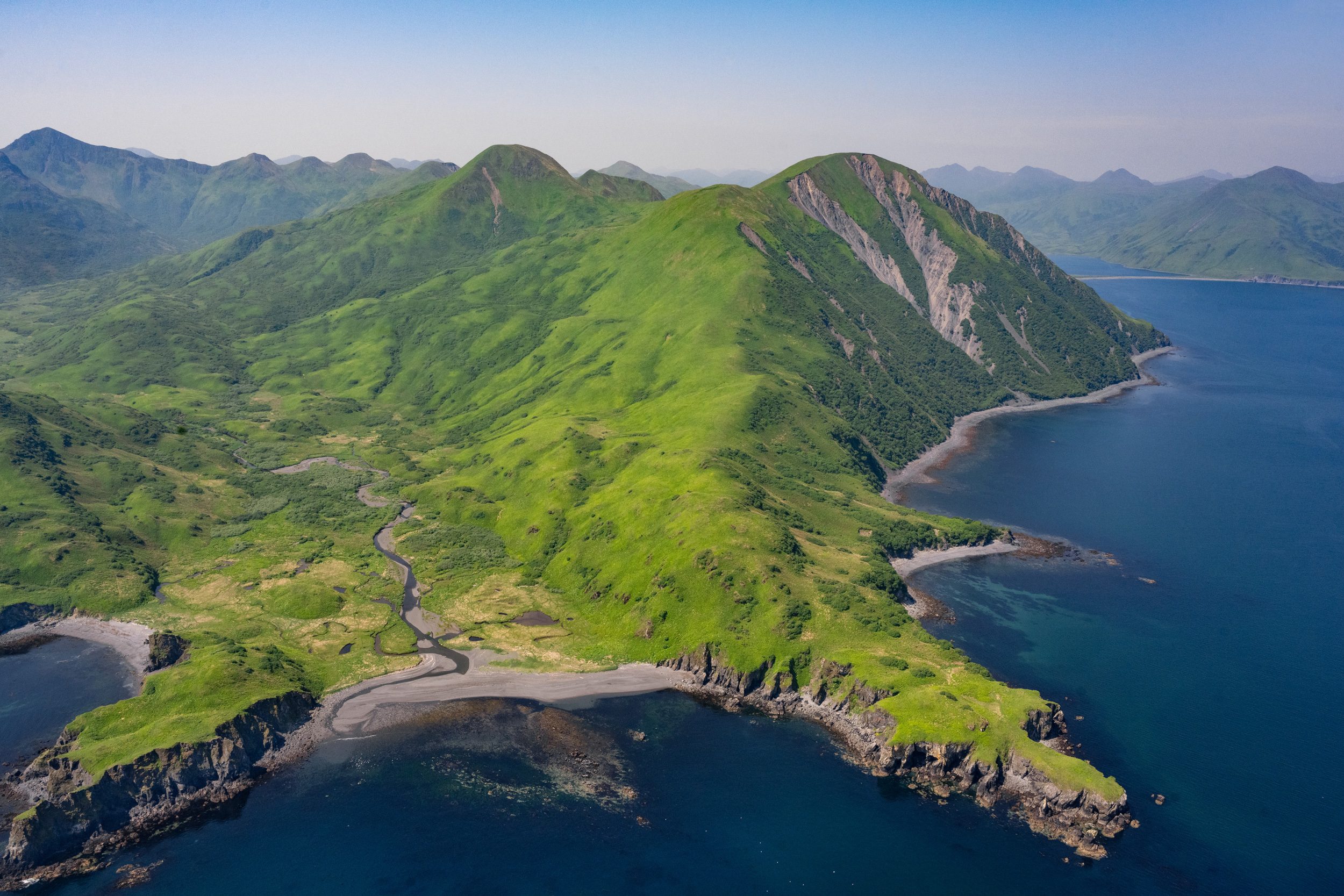
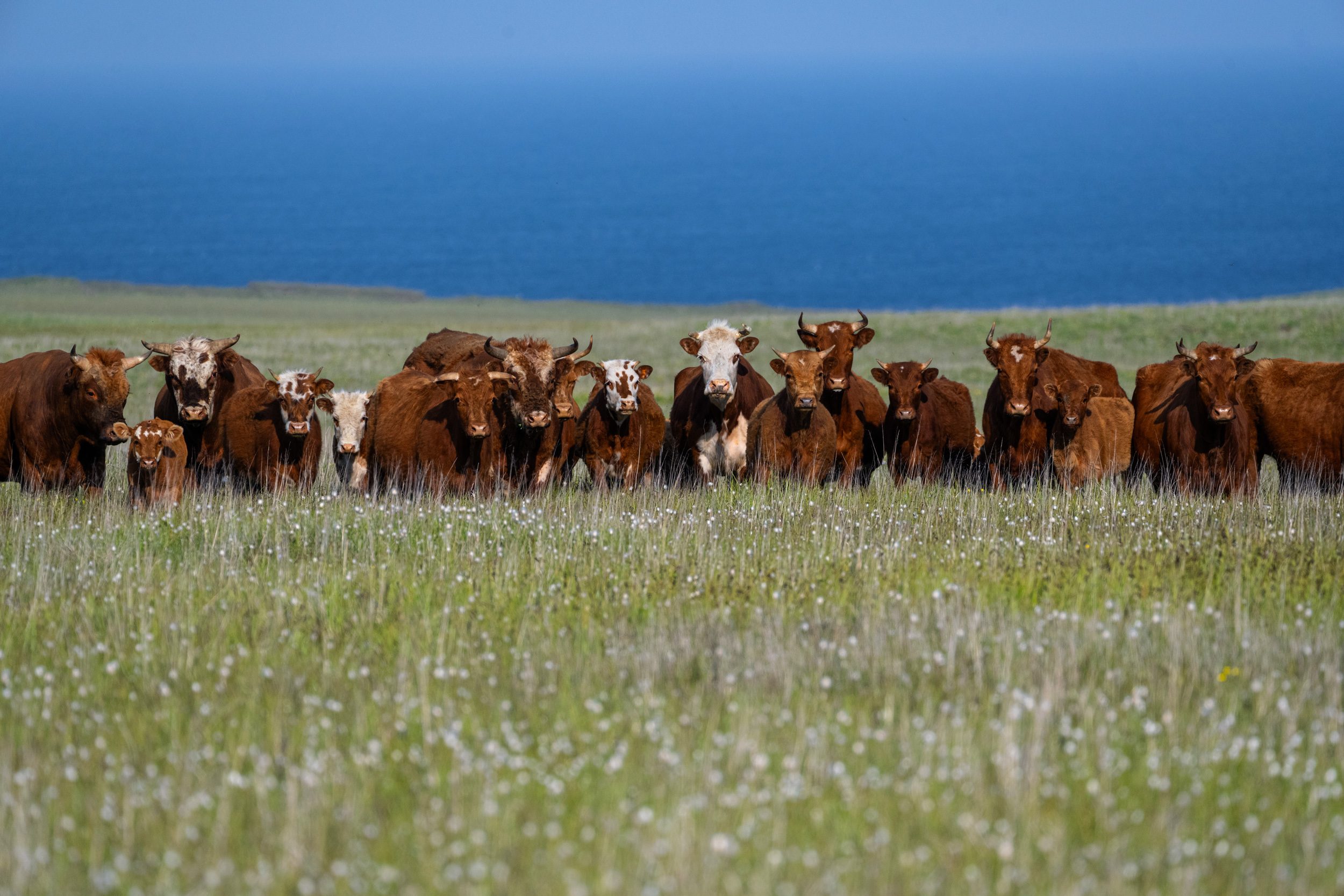
Cows have been left to go feral on an island in Alaska, following a complicated and not-ideal bit of reasoning from locals and policymakers there. This is a photoessay of the Chirikof island, and it’s really quite crazy. Cows have trampled over (ha!) the local ecosystem, but also don’t seem to be managing themselves very well.