Hi there, reader! And welcome to another issue of Kat’s Kable. It’s 9pm on Sunday and I’m just finishing the newsletter because my attention has been captured by Heretics of Dune and Chapterhouse Dune this week/weekend. I’m going to finish Chapterhouse soon and I don’t want it to get over. I will be back to re-read soon, though. Have you read the Dune books? Life has been as busy as ever, with no punctuation. It’s just words and sentences and paragraphs without the breathers in between to take a break. Reminds me a little bit of this line from David Whyte’s poem Everything is Waiting for You: “As if life were a progressive and cunning crime with no witness to the tiny hidden transgressions.”
Toodle-oo. I’m going to make myself a cup of coffee (I’m really loving light roasts made using my Hario V60) and get back to Chapterhouse.
If you got this from a friend and want to subscribe, here’s the link. Also, if any of the links are paywalled and if you don’t want to pay for a subscription, try opening the link in incognito mode in your browser. This works if the website has a “soft” paywall. If that doesn’t work, you can access the website using a different browser on the same device, or use a different device altogether. Another, slightly involved, method is to try to disable JavaScript and reload the page. This works on some websites for me.
1. How Chinese Sci-Fi Conquered America - New York Times (via Internet Archive)
I read the Three Body Problem back when I was in undergrad, and it had me deeply enthralled. This article itself is back from 2019, but I just read it this year. It starts off with the Three Body Problem and how Ken Liu masterfully translated it to English while also modifying it to better reflect the story and the absence of Chinese censors, and then moves on to why sci-fi has been on the rise in China (a big influence is the breakneck speed of tech transformation and surveillance) and finally to how Chinese sci-fi is getting more readership in America, although it doesn’t really delve into this much. Overall a fascinating read.
2. The Alchemy of Photography - Coonoor and Co.
Lovely musings on the art and magic of photography by Olaf Willoughby.

3. What Don Quixote Reveals About an Empire At Its Peak - Lithub
A fun excerpt from España: A Brief History of Spain by Giles Tremlett. I haven’t yet read Don Quixote and I really feel I must, and soon.
Although Quixote is fantasy, there is social realism and biting critique in its portrayals of Spanish society, as there also are in the picaresque genre. In fact, it is this realism (along with its irony and the deliberate, witty “intertextual” play with other books) that marked it as new and different. It also, however, reflected a sad truth about the “golden age” and the “glorious empire:” that its people were getting poorer, as benefits flowed abroad or were pocketed by a few, while inflation made the poor even poorer.
4. Why Bridges Don’t Sink - Practical Engineering
This article is a transcript of a video; it talks about foundation piles and how they’re key to making bridges… well, not sink. What’s striking is the fact that foundation pile is just fancy terminology for something whacked into the ground as deep as possible, and it’s an old technology. Sometimes that’s what works best.
5. Badass detective: How one California officer solved eight cold cases in his spare time - SF Chronicle
This is the story of Matt Hutchison, a detective in California’s Bay Area who just magically picks up cold cases and solves them. How about this!:
_The trash truck gig required creative planning. Cops seeking DNA samples typically raid a suspect’s trash can at night. But Hutchison learned that this person of interest always put out his can in the daytime, just before the truck arrived. Any deviation from the normal pickup routine might alert the target and blow the investigation.
So Hutchison obtained permission to ride on the truck, and to modify it. He and his partner climbed into the belly of the truck with a tarp and fashioned a catch basin, then had a mechanic disable the truck’s compactor arm.
Then a final detail, choreographed by Hutchison.
“We hooked his can and dumped it,” Hutchison said. “Then we drove to the next can, and the driver, under my instruction, acted as though there was a malfunction of the mechanical arm. We made it look like the arm broke down, then we left the neighborhood with only our suspect’s trash.”_
6. Sea Change - Oak Tree Capital
I really dug deep into my own archives to find this article. This is a 2022 memo by Howard Marks who is the co-chairman of Oak Tree Capital. He’s talking about how he’s seen only two major “sea” changes in his life so far, and how he thinks we’re living through a third one now. The third sea change is the change in interest rates from near-zero levels to drastically larger ones where investors can feel more comfortable in simple credit investments rather than more risky equity investments. Food for thought.
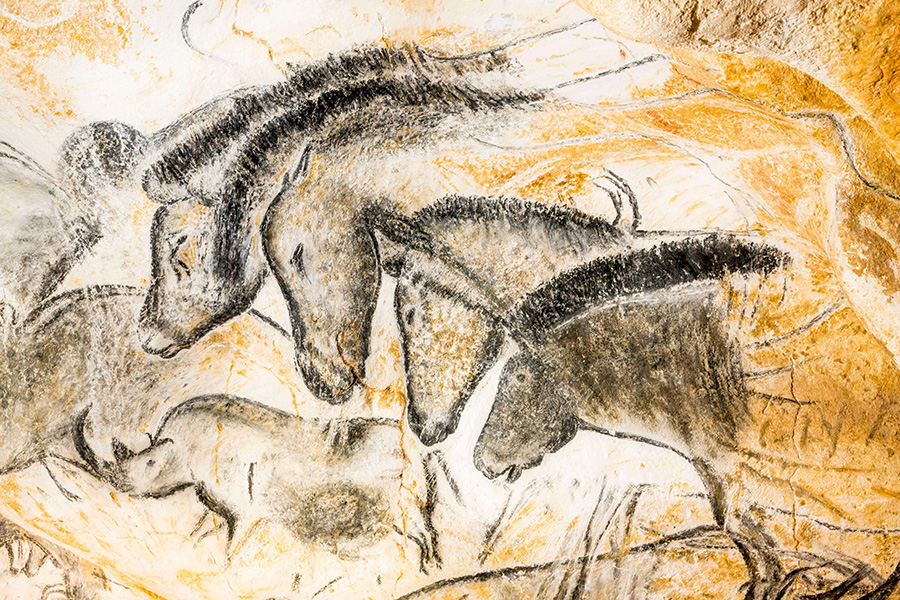
7. The tale of the domesticated horse - Knowable Magazine
Well, well, looks like my article timing is slightly off. I’d shared an article about Sable Island’s wild horses just last issue and now pops up an article about domesticated horses. This is really nice - lots of details about the history of our shared relationship and evolution with horses.
8. The Civilization Kit - The New Yorker (soft paywalled)
This is a 2013 piece about Marcin Jakubowski, who is described as an “agrarian romantic for high-tech times”. He’s the founder of Open Science Ecology, where he advocates for “open source hardware” as a foundation for “open source economy”, spanning manufacturing, agriculture and product development. Make no mistake, he’s a crazy guy but he’s a crazy guy with a vision. He often appends this Robert Heinlein quote to his emails, which I think says a lot:
A human being should be able to change a diaper, plan an invasion, butcher a hog, conn a ship, design a building, write a sonnet, balance accounts, build a wall, set a bone, comfort the dying, take orders, give orders, coöperate, act alone, solve equations, analyze a new problem, pitch manure, program a computer, cook a tasty meal, fight efficiently, die gallantly. Specialization is for insects.
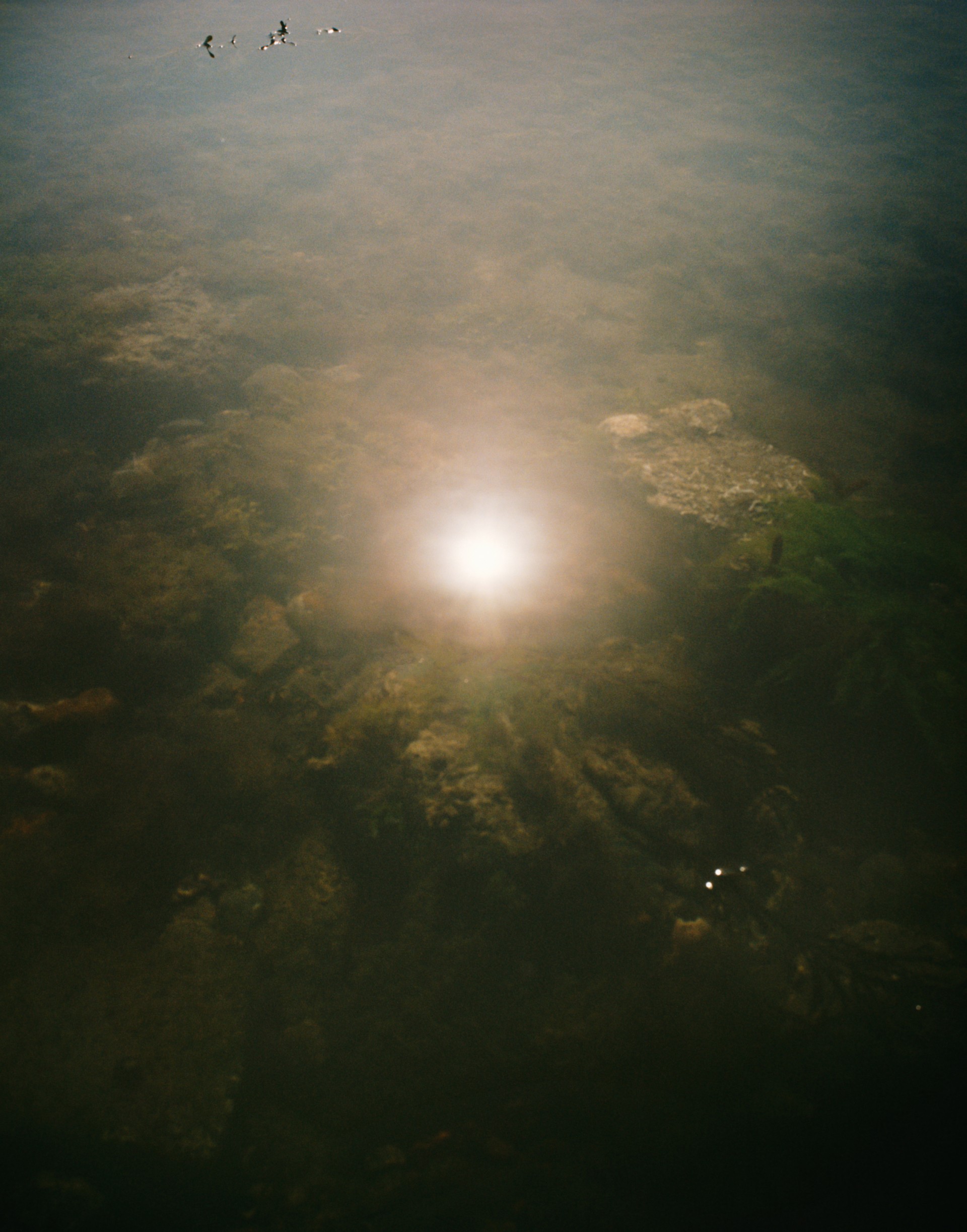
9. Photographer Laurence Ellis on the Transience of Tide Pools - Atmos Earth
More beautiful pictures.
10. No Salt - Jake Seliger’s website
This essay reduced me to tears. I recently learnt about Jake Seliger and his struggles with cancer - this particular essay is by his brother, Sam, as he arrives at Jake’s home close to the end of Jake’s life. He talks about how Jake loved to cook, and how seeing no salt in the kitchen moved him particularly:
I reached for the salt, and found the bottle empty. I’m not sure why, but I started weeping. No salt. No salt means that he’s not cooking. He’ll never cook again. […] If the salt is gone, then Jake is too.