Hello there, reader. I’m on time today! A Kat’s Kable issue on a Sunday morning - blessed. One of my friends was kind enough to tell another that “we look forward to” the Kable, and I responded to that with something along the lines of, “well, with the number of breaks in my schedule, even I look forward to the Kable.”. There’s nothing profound here - just a moment of observation. I really like the articles this week - they do have a bit of a scientific bent to them but there’s also some interesting psychlogy-ish essays as well as lots and lots of lovely pictures.
As always, enjoy and if you wanna say hi or give me any feedback, I’m always all ears and you can just reply to this email.
If you got this from a friend and want to subscribe, here’s the link. Also, if any of the links are paywalled and if you don’t want to pay for a subscription, try opening the link in incognito mode in your browser. This works if the website has a “soft” paywall. If that doesn’t work, you can access the website using a different browser on the same device, or use a different device altogether. Another, slightly involved, method is to try to disable JavaScript and reload the page. This works on some websites for me.
1. The Great Chinese Art Heist - GQ
OK, this is probably the last heist story for a while. I think about a year ago or so I had stumbled upon a list of great heist stories, and obviously saved them all. I’ve been slowly sharing them on the Kable, and now I’m done. This one is obviously crazy interesting:
“Strange how it keeps happening, how the greatest works of Chinese art keep getting brazenly stolen from museums around the world. Is it a conspiracy? Vengeance for treasures plundered years ago? We sent Alex W. Palmer to investigate the trail of theft and the stunning rumor: Is the Chinese government behind one of the boldest art-crime waves in history?”
2. Growth - Nerd’s Eye View
I often enjoy Pam Mandel’s writing and this one is no different. The post itself is from 2022, but I feel it’s an evergeen one (ha!) - because it’s about planting interesting lawns and how chaotic lawns with lots of mulch and lots of plants are and yet how they are beautiful messes.
It is a beautiful mess. I walk through it often. This afternoon, I lost count of the honey bees in the lavender, and then I followed a fat bumblebee as he stuck his head in and out of the poppies. He squeezed his round fuzzy body into the tightly curled petals of the newer blooms, diving inside to collect the pollen he’d bring back to the hive.
3. Why doesn’t advice work? - Dynomight newsletter
Interesting essay (even if part of it leans towards the banal) about advice - obviously us as humans are very.. interesting (for a lack of a better word) in the way we approach both giving and receiving advice.
4. Bowerbirds: Meet the Bird World’s Kleptomaniac Love Architects - The Nature Conservancy
“They display, they dance, and they collect baubles like a jealous hoarder. Meet Australia’s incredible bowerbirds.” - what’s not to love!
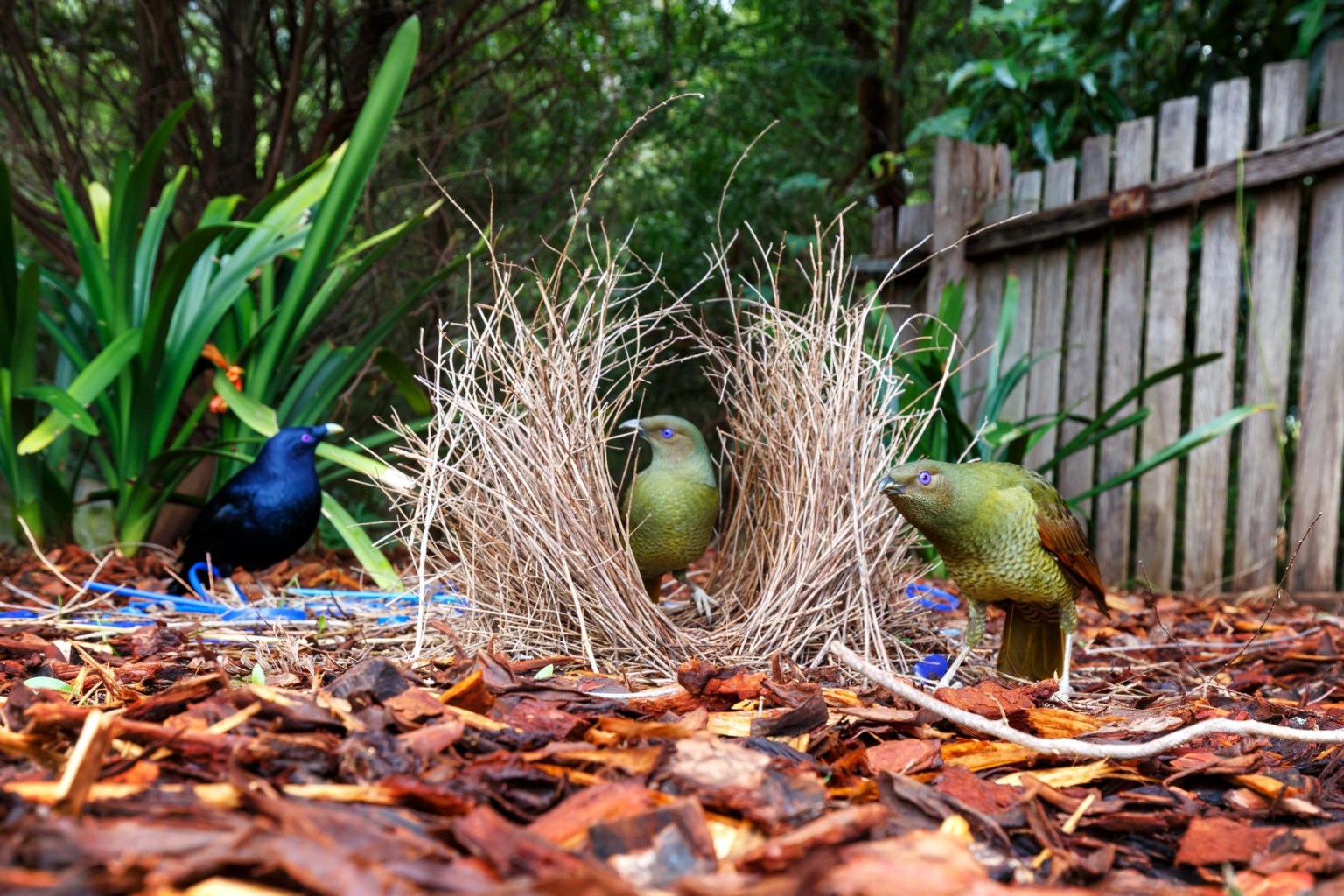
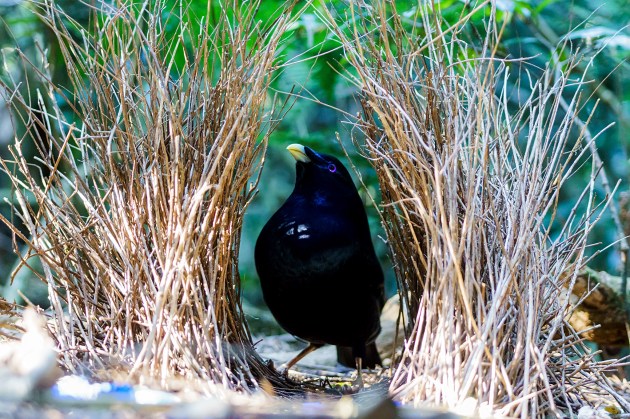
5. Relationships are coevolutionary loops - Henrich Karlsson’s Substack
I read this Substack post as a standalone, although I just realized it’s part of a series so I’m going to add those to my list right now. Similar to the advice piece I shared just above, this one may seem a bit obvious/banal but I think the way Karlsson explores the premise makes it a worthwhile read.
When I look back at the kids who sat at the bus station in Cochabamba, I can barely recognize them. In photos, they look like us, yes, but their interiorities! Their interiors only vaguely resemble ours. But what is fascinating is that the thing that changed our inner lives came from within. I used Johanna’s words to rearrange myself, and this allowed me to say things that rearranged her, again and again. It was the house growing in a coevolutionary loop with its inhabitants. It was the moth and the orchid.
6. The awake ape: Why people sleep less than their primate relatives - Knowable Magazine
Interesting essay about the sleep patterns of humans and our primate co-species and ancestors. Humans spend less time asleep than their primate counterparts and spend a lot more time in REM sleep. Humans seem to have evolved to need less sleep, and it’s interesting. You can’t really study ancient sleep patterns from fossils or archaeology, so you have to do it in other creative ways.
7. 2023 Hasselblad Masters Winners Show the Best in Fine Art Photography - Petapixel
Beautiful pictures. My favourite:

8. More Than 4,000 Moth Species Flit Across Texas. One Scientist Photographed 550 in His Yard. - Texas Monthly
Another fun piece with lots of cool pictures! This essay is about Curtis Eckerman, who is a herpetologist by trade but also loves sighting and cataloguing insects. This piece also reminded me of A Once In a Lifetime Bird from Kat’ s Kable #277. Eckerman has made a crazy number of contributions to citizen science app iNaturalist - 19000!
9. Monumental Proof Settles Geometric Langlands Conjecture - Quanta Magazine
The Langlands program is a monumental “web” of conjectures connecting three disparate fields of mathematics - number theory, function fields and geometry. The program has already yielded some amazing mathematical results, and if the entire thing is proved, it would revolutionize the way we think about mathematics and the physical world. This piece is about the proof of the geometric Langlands conjecture, which is to say that the algebraic geometry <> representation theory correspondence of the Langlands program has been proven.
10. Real peer review has never been tried - Works in Progress
Saloni Dattani, whose work I’ve shared earlier as well (e.g. How we adapted to milk, and how we adapted it to us in issue #286), writes well about the general academic process and environment. Here, she dives into the history of academic peer review (how do we get fellow scientists in a field to vet a paper before it gets published) and how fast, democratic and effective peer review hasn’t really happened in the last few hundred years of science. I’m inclined to agree with her - while I think today peer review does take place in a more democratic way than earlier, it’s highly disincentivized and unfair in other ways. With current science being primarily computationally driven, and with the availability of tools that can easily replicate the results of studies, there is hope that things may change.