Hello there, reader, and welcome to another issue of your favourite internet newsletter, Kat’s Kable - as usual, there are ten great things for you to read. I’m having a good weekend filled with wholesome and nice interactions and overall am trying to slightly shift my perspective in life - most of it is centering Visakan Veerasamy’s “focus your time and energy on what you want to see more of”. I also met a new friend and befriended new trees, and am about to go meet an old friend after many years. Exciting stuff. Life, and in particular, my professional life, has been a lot, and honestly it’s gotten me thinking about how sustainable things are for me currently - and how the overwork (and sometimes stress) bleeds into other aspects of my life. So. I will think. But over a lunch of pizza and lemonade.
As always, I’m just an email away - feel free to reply to this email any time.
If you got this from a friend and want to subscribe, here’s the link. Also, if any of the links are paywalled and if you don’t want to pay for a subscription, try opening the link in incognito mode in your browser. This works if the website has a “soft” paywall. If that doesn’t work, you can access the website using a different browser on the same device, or use a different device altogether. Another, slightly involved, method is to try to disable JavaScript and reload the page. This works on some websites for me.
1. Intel Vs. Samsung Vs. TSMC - Semi Engineering
As part of work, I’ve been spending more time learning about the semiconductor ecosystem and I found this article to be quite an interesting one about the advances happening at the leading semiconductor foundries of the world. It used to be easier (relatively speaking) to pack in more transistors in the same amount of area, and now that it’s gotten harder, recent innovations and in particular advanced packaging techniques have become a lot more creative and also much harder to implement. This essay is a deep dive into what the three leading foundries are doing to go toe-to-toe with one another.
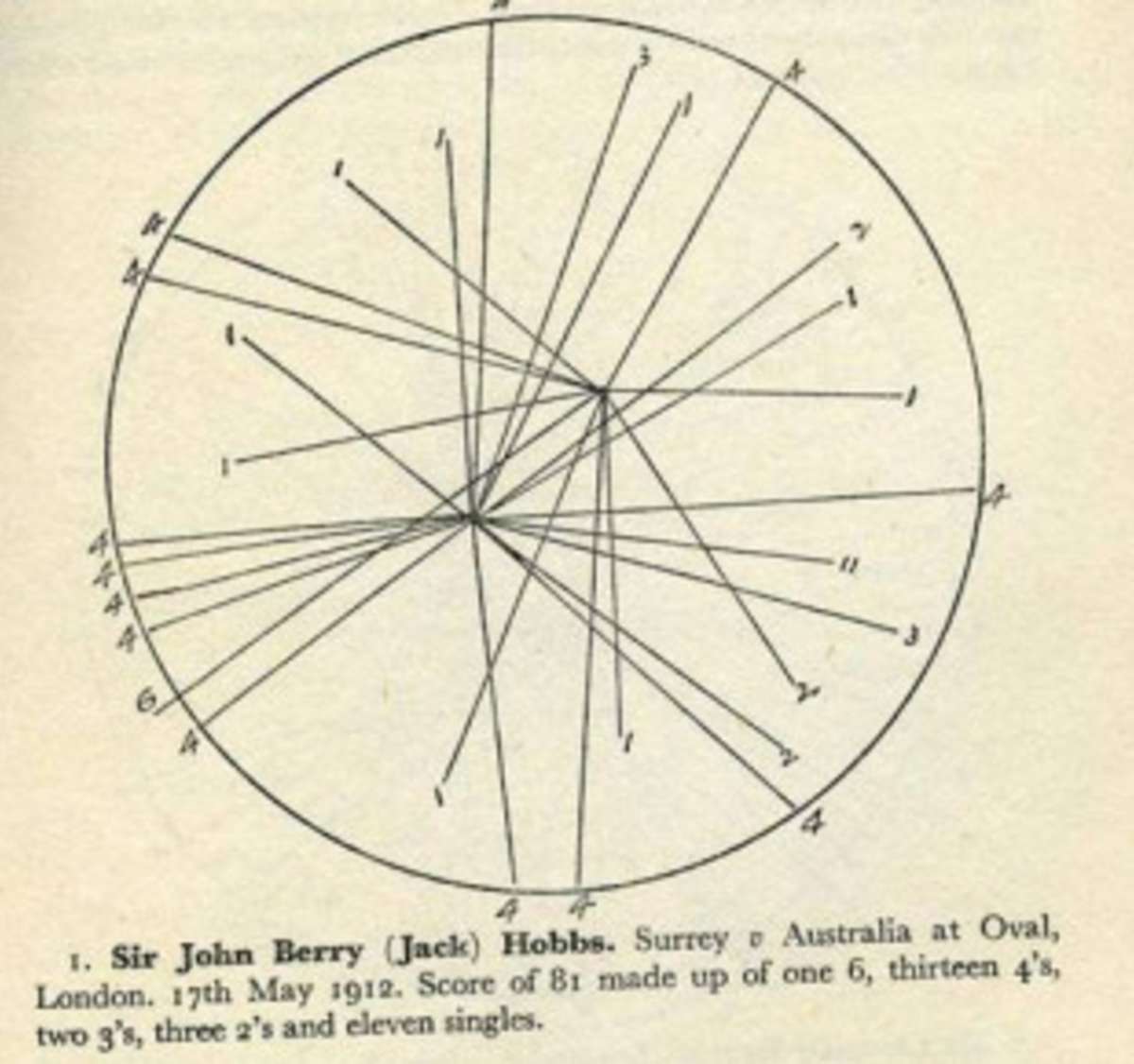
2. Fergie’s wagon wheel - Cricinfo
Not really a longform piece but an interesting piece about the origin of “wagon wheel” graphics that are now very common in analyzing batting statistics in cricket. The first wagon wheels were created in the 1910s by a scorer and baggage master called Bill “Fergie” Ferguson and they’re actually not that different from modern day wagon wheels. Really cool.
3. Part 3: The first walkable city in America in a century - Devon Zuegel’s blog
I’ve been meaning to share this for a bit, but for some reason I couldn’t find the right link. I really like Devon Zuegel’s writing and the topics she writes about, and this one is no exception. She’s been part of a new project in California called California Forever, which is a new city/township that incorporates some of the best parts of urban design - lot of walkability, mixed zoning, easy access to external rail and road systems, and so on. Cool!
4. Healing Body, Mind, and Earth Through Natural Hair - Atmos Earth
“Writer Britny Cordera heads to Jamaica for The Frontline to learn how natural hair can help empower Black women to reconnect with nature, overcome intergenerational trauma, and combat environmental racism.”
I found this pretty eye-opening in more ways than one.

5. How to improve your walking technique - Suunto
This isn’t longform at all , but it’s something I like to share with people in my life regardless. Lots of interesting tips on how to walk better - which I think many of us can incorporate in our lives given that walking is something we always do but don’t necessarily pay a lot of attention to.
6. Isometric Projection in Game Development - Pikuma
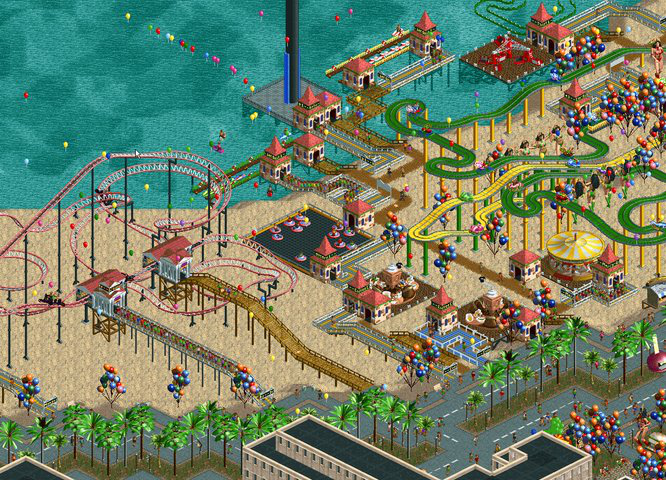
I remember when I was in undergrad and I had my engineering drawing course, I hated isometric projections. I loved them as a concept, but I was bad at making them and I hated having to try and try and try again (until my roommate took pity and finished my assignments for me). I still think they’re very cool, and this visual essay on how isometric projections work and in particular in game design was really nice in giving an in-depth introduction.
7. If Your World Is Not Enchanted, You’re Not Paying Attention - The Convivial Society
I’ve shared essays from The Convivial Society multiple times earlier (Your Attention Is Not a Resource is one) and this is another reminder from LM Sacasas about the way we participate in and observe the world - and how being enchanted by it is a key part of our lives. My life has been busy and filled with tasks lately, so I could definitely use the reminder. I love the idea of dwelling on the meaning of “attention” - it’s something that you “give” or “pay” but doing that makes you feel more alive.
8. Your Immune System Is Not a Muscle - Rachel Thomas on Fast.AI
“Some people compare the immune system to a muscle, suggesting that the more you use it, the stronger it gets. Who doesn’t love an analogy? But is this one accurate?”
This is an interesting essay about the “hygiene” and “old friends” hypothesis: the former talks about how exposure to microbes improves our immune system, and the latter is a slightly different way of thinking which says that we’ve co-evolved which many microbes over the last 300,000 years which help us a lot. Our modern world is now dominated by crowd infections (they can travel much further than earlier) which earlier didn’t really transmit from group to group.
Our “old friends” parasitic worms and beneficial microbes are associated with a reduced risk of allergies and autoimmune diseases. No such relationship exists for crowd diseases. In fact, the opposite is true. Crowd diseases contribute to allergies and autoimmune diseases. Comparing the immune system to a muscle that gets stronger with use is overly simplistic and, in many cases, inaccurate. There is huge variety in how various pathogens impact us. Being precise in considering different types of microbes and infections will allow us to better understand human health.
9. Parasites Are Everywhere. Why Do so Few Researchers Study Them? - Smithsonian Magazine
Great sequel to the previous article, I feel. This one is about parasites, which again are fundamentally important to us and most other species because of them being part of our “old friends”. Not only do parasites help individual species, but they also play an important role in maintaining checks and balances between species’ in ecosystems. But they’re not “sexy”, and the study of parasites isn’t as institutionally organized as the study of other living beings, and thus there aren’t too many people studying them. Maybe they should! It’s imperative for us to know more about how these little (and sometimes big) guys interact with the rest of the world.
10. The Games People Play With Cash Flow - Commoncog
I started this issue with an article related to my work, and I’m ending with another such. The author’s premise here is that if a business’s goal is to maximize shareholder/stakeholder value, then the key is not to generate as high profits as possible, but rather to maximize the amount of free (and other types) cash flow that the business generates - this can often mean a bunch of unconventional methods like always reporting a loss and resorting to constant acquisitions to keep net profits low and so on, and it’s really fascinating to me because this is one of those things which is purely man-made. We often talk about scientific technologies (like the laptop I’m typing this on) as a man-made phenomenon, but one could argue that the building blocks exist in nature - these types of financial engineering maneuvers are much more man-made.