Hi there! Here I am again with another issue of Kat’s Kable - with ten good things to read per usual. It’s 9:45pm and I’m sleepy, so even though I have things to say, I shan’t this time. Enjoy!
If you got this from a friend and want to subscribe, here’s the link. Also, if any of the links are paywalled and if you don’t want to pay for a subscription, try opening the link in incognito mode in your browser. This works if the website has a “soft” paywall. If that doesn’t work, you can access the website using a different browser on the same device, or use a different device altogether. Another, slightly involved, method is to try to disable JavaScript and reload the page. This works on some websites for me.
1. River at the Heart of the World - Emergence Magazine
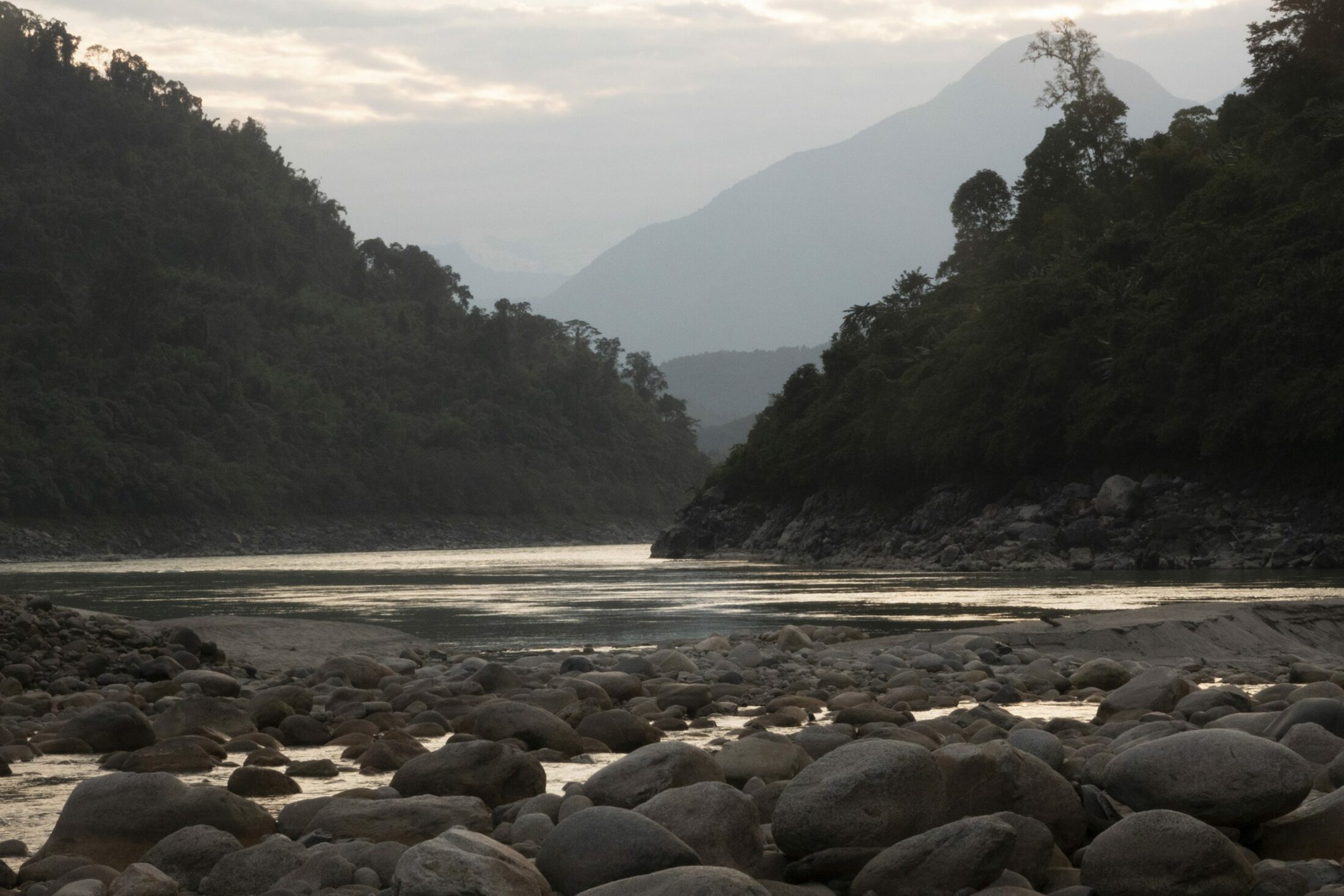
I loved loved, loved this essay by Arati Kumar-Rao - she talks about her journey into the deep river gorges in the land of Pemakö - a secret land that plays a key role in Tibetan Buddhism. The piece hinted at the same energy that Peter Matthiessen’s The Snow Leopard , and is filled with a sense of wonder and exploration. The overall sacred landscape is considered to be the geographical manifestation of the Tibetan Goddess of Wisdom - with different sacred sites marking her five chakras. It’s beautiful and made me want to be there. I also realized just now that the essay comes with a narration by the author, and now I want to check that out too.
2. Why So Few Matt Levines? - Gwern Branwen’s website
Really fun piece about the finance and economics blogger Matt Levine - he’s arguably the most popular newsletterist in the financial industry, and because of that, he’s influential, people leak news to him, and his writing is enjoyed by people both in and outside the financial industry. Gwern explores why we don’t have more such writers - there are a bunch of reasons pertaining to the fast-paced and results-oriented nature of the economy and the financial industry, and also simply that a successful newsletterist like Levine has to pass a bunch of filters, and there aren’t actually others like Levine.
3. The Invisible Seafaring Industry That Keeps the Internet Afloat - Verge
Phew. This is brilliant! It’s about the twenty-odd ships around the world that are always ready to fix breaks in fiber optic cables on the seabed. They quite literally keep the economy going, but the industry as a whole is one mostly under the wraps even though the work is super interesting. This interactive piece is really engaging - lots of images and interviews with folks who work this industry.

4. Empire of Dust: What the Tiniest Specks Reveal About the World - The Guardian
This is an excerpt from Jay Owens’ Dust: The Modern World In a Trillion Particles and it’s about a modern day nemesis: dust. There’s all kinds of dust in the world, whether it’s from fabrics and domestic activities or from traffic and automobile fumes. A lot of us embark on keeping our homes and spaces dust-free - but it always feels like a losing battle. Partly because it is! The most interesting part of this excerpt was the historical perspective about London being black because of coal and soot, and the sophisticated methods used to clean historical buildings.
Dust is simultaneously a symbol of time, decay and death – and also the residue of life. Its meaning is never black or white, but grey and somewhat fuzzy. Living with dust – as we must – is a slow lesson in embracing contradiction: to clean, but not identify with cleanliness; to respect the material need for hygiene while distrusting it profoundly as a social metaphor.
5. New Pop-up Walk, Reading Digitally in 2024 - Craig Mod’s newsletter
I’ve shared Craig Mod’s work earlier on the newsletter too, and I’ve always enjoyed his writing and perspectives. This is a slightly off-beat piece to share - he talks about an upcoming walk and newsletter, but also about the BOOX Palma, a handheld Android-based Kindle-style device that he’s fallen in love with. I’ve recently been thinking about gadgets and how I want to start thinking about upgrading my electronics, and I found his “review” of sorts of this device very nice.
6. How to Make the Universe Think for Us - Quanta Magazine
“Physicists are building neural networks out of vibrations, voltages and lasers, arguing that the future of computing lies in exploiting the universe’s complex physical behaviors.”
This is a 2022 article (I think I’m finally done with my old catalogue of pending articles) about analog neural networks that aren’t based on any electronics at all. The hypothesis is that digitization and discretization of the building blocks of artificial neural networks leads to suboptimal and highly inefficient performance - so how can we make neural networks “analog” and continuous? Or in other words, the title of the essay - how do we modify existing physical systems to think for us?
7. Could dinosaurs have grown any bigger? - BBC
Titanosaurs ended up being the biggest sauropods and the biggest (about 80 tonnes) dinosaurs ever. There were some reasons this was possible - the pneumatic air sacs between their bones that supported their weight, the evolution of flowering plants that served as a better food source, and so on. If not for the asteroid impact, would these big boys have grown even bigger? Scientists think maybe up to about 200 tonnes, but perhaps not much larger than that. That’s because they’d already been evolving for ~150 million years till their 80 tonne mark, and also because even whales don’t get much heavier despite living in a buoyant medium all their life (which makes handling all that weight much easier).
8. ‘It’s not for the faint-hearted’ - the story of India’s intrepid women seaweed divers - NPR
A story about the women of Pamban Island - located between India and Sri Lanka - and how they earn their livelihoods harvesting seaweed off the ocean floor. It’s a grueling job the days they have to do it (with periods in between to let the seaweed regenerate) and also involves a bunch of other conflicts - often alcoholic husbands and run-ins with wildlife conservation officials (who want to protect the Gulf of Mannar Marine National Park).

9. Reflections on Palantir - Nabeel Qureshi’s blog
I’ve always had mixed thoughts about Palantir as a company - mostly because a lot of their work was geared towards defense-led security. Nabeel writing about his time at Palantir before starting his (currently stealth-mode) startup is pretty interesting and revealing - the kinds of people there and the unique way the company was structured.
10. Why You’ve Never Been In A Plane Crash - Asterisk Mag
Phew. I actually didn’t know about the way the airline industry investigates mishaps - through a blameless procedure that has no intention of prosecuting whoever it is that made a mistake to lead to the disaster. What this ends up in is a high-quality investigation where everyone is honest because they don’t need to protect themselves, and finally it means that this is the most effective way to prevent other such incidents in the future - pretty cool to read about.