Hello reader, it’s a new year and a new issue of your favourite newsletter. I’ve been sick for a bit and honestly it’s just a hectic year catching up to me. It’s been a year of… checks notes… getting married, moving cities, work getting super hectic and my sourdough starter deceiving me for six months. It’s been amazing and enriching and tiring - I suppose what more can one ask of life? I’m glad that Kat’s Kable is staying constant though. At this point, I don’t worry about the sporadic nature of the newsletter - I’m just happy I can continue to curate it to keep my sense of wonder and curiosity alive.
Anyhow, all that aside, as always, there are (almost) ten good things to read. And also as always, please write to me if you have anything to say - I love hearing from you and right now, I’d especially love it if you wanna tell me about 3D printing! It’s my newest obsession and I’m actually seriously considering getting one.
If you got this from a friend and want to subscribe, here’s the link. Also, if any of the links are paywalled and if you don’t want to pay for a subscription, try opening the link in incognito mode in your browser. This works if the website has a “soft” paywall. If that doesn’t work, you can access the website using a different browser on the same device, or use a different device altogether. Another, slightly involved, method is to try to disable JavaScript and reload the page. This works on some websites for me.
1. Apples Have Never Tasted So Delicious. Here’s Why - Scientific American
When I was in the US for my PhD, I was forever delighted by the apples. The apples! Glorious crunch, beautiful hues of orange and pink, and new varieties every once in a while that merited their own Kat’s Kable articles even (After two decades of research and development, WA 38 lands this fall. It could disrupt an entire industry. from issue #182). This is another fun fun piece about the discovery of the “crisp” genes and how it’s revolutionized the state of apples.
2. Trinity Fallout: Nuclear Downwinders in New Mexico Fight for Recognition - Places Journal
Pretty long-winded article about the effect that the Manhattan Project’s Trinity nuclear tests (in New Mexico) had on the various people around the area. Funnily enough, given that the effects on some of these downwinders are pretty severe, these are the first people nuked and haven’t really gotten any recognition or compensation from the US government.
3. The Hidden Engineering of Landfills - Practical Engineering
I always feel a little sheepish sharing posts from Practical Engineering because they’re essentially transcripts of YouTube videos. But you learn so much! I learnt so much about how you’d engineer a landfill, how that technology has gotten better, and how properly designed landfills are super important. I remember someone once commenting on an online forum that all our outcry about recycling is just brouhaha, and there’s more than enough space and expertise to just sequester things in landfills until future generations figure out how to mine useful materials back from them. Not a perspective I agree with, but an interesting one nonetheless.
4. The centrality of stupidity in mathematics - Math for Love
“The Importance of Stupidity in Scientific Research” is a 2008 paper published in Cell that’s quite fun and talks about the importance of constructive stupidity, and the feeling of being a beginner and venturing out to solve problems. The original essay is linked in this piece as well as some cute commentary.
I’ve come to believe that one of the best ways to address the centrality of stupidity is to take on two opposing efforts at once: you need to assure students that they are not stupid, while at the same time communicating that feeling like they are stupid is totally natural. The message isn’t that they shouldn’t be feeling stupid – that denies their honest feeling to learning the subject. The message is that of course they’re feeling stupid… that’s how everyone has to feel in order to learn math!
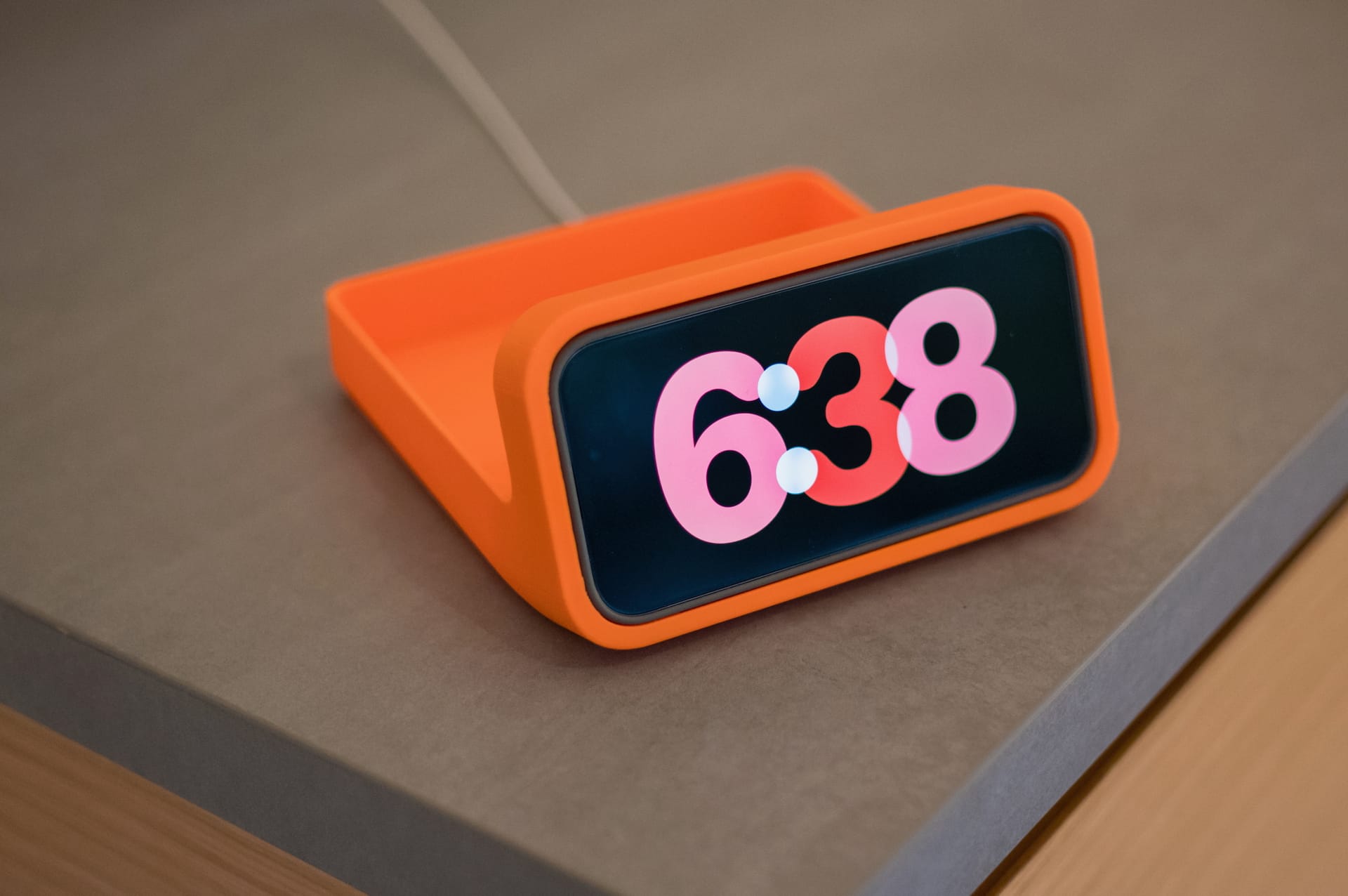
5. How I Designed a Dieter Rams inspired iPhone Dock - Fatih Arslan’s blog
OK this is amazing! I’ve been watching a lot of 3D printing content on YouTube recently, so much so that I’m now considering buying a 3D printer soon, and I’ve loved it. This post by Arslan is a riff on Scott Yu-Jan and Overwerk’s beautiful Braun-inspired iPhone dock, and he talks through some design improvements he’s made to the original (already great) design. The blog post also links to Scott and Overwerk’s video, which is amazing. Do check it out. And if you’re already 3D printing at home or looking to get into it, I’d love to chat!
6. The Pentium as a Navajo weaving - Righto
OK, wonderful! Here’s a picture of a Navajo weaving by Marilou Schultz that’s designed to resemble the original Intel Pentium chip:

Schulz is creating another weaving at the moment resembling Fairchild Semiconductor’s 9040 chip. This chip was actually built by Navajo workers on Navajo land! This piece isn’t really making a point per se, but just a fun and informative exploration into a connection that I had no idea about.
7. Machines of Loving Grace - Dario Amodei’s blog
Dario Amodei is the CEO of Anthropic, one of the large AI companies in the race to build LLMs and artificial general intelligence (AGI). Amodei here zooms out and talks about the various areas he expects AI to revolutionize what we do - I don’t know.. something about his approach and opinion put me off and gave me the sense that he’s making assumptions that I wouldn’t make when understanding the world. At the risk of sounding reductive, I feel it’s a very tech-forward way of thinking about things with less of a consideration of the human aspects.
8. The Great Data Integration Schlep - Sarah Constantin’s blog
Sarah Constantin’s Substack is great, and this essay about why data intelligence, AI, etc. is really bottlenecked by the very human problems of actually getting the data in one place and in a format that can be digested by a machine/algorithm. Especially with enterprise data and AI adoption there - it’s not bottlenecked by the advancement of the AI algorithms or frameworks, but by the humans and decision-making processes that get the data together. This also reminds me a bit of Nabeel Qureshi’s article recently about working at Palantir (Reflections on Palantir).
9. Why This Great Mathematician Wanted a Heptadecagon on His Tombstone - Scientific American (via archive.is)
Oooh this takes me back to school when we had to draw as many geometric shapes as we could with just a compass and a ruler. Turns out triangles, squares, heptagons, hexagons are easy. But constructing a regular polygon with 17 sides (a heptadecagon) is hard! Primarily because 17 is a prime number and you have to construct it in its own unique way. What’s amazing is that Gauss actually figured out how to do it - but never did it himself. He asked for it to be inscribed on his tombstone. The engraver found it hard, so just put a circle. Now, isn’t that funny?