Hello there, reader, and welcome back to the Kable. It’s a nice peaceful Sunday afternoon - and I’m drinking some new tea while writing out the newsletter. Fun times. I was away last weekend visiting folks for Diwali - no reading, no time, no Kable. Can’t keep away for too long though. I feel one of the interesting things about the Kable is that absolutely nothing has changed since the launch of ChatGPT and the avalanche of …everything else after that. Apart from a few articles that talk about AI, I run the Kable the same way. I like that. I do feel, though, I can augment things a bit, maybe? I’ve been thinking about using dictation/Whisper on my laptop to talk instead of typing - I think that would be pretty cool. Apart from that, I don’t really know. Sometimes I’m tempted to get an LLM to write an issue of the Kable and see how it does. But I don’t do that because I’m afraid it’ll be quite good. Ha!
1. The Powerful Potential Of Tiny Conservation Plots - Noema
This is a nice piece about farming and conservation plots in New York - I think these are hard to pull off (not the growing of things, but the bringing together of community) but they’re so rewarding.

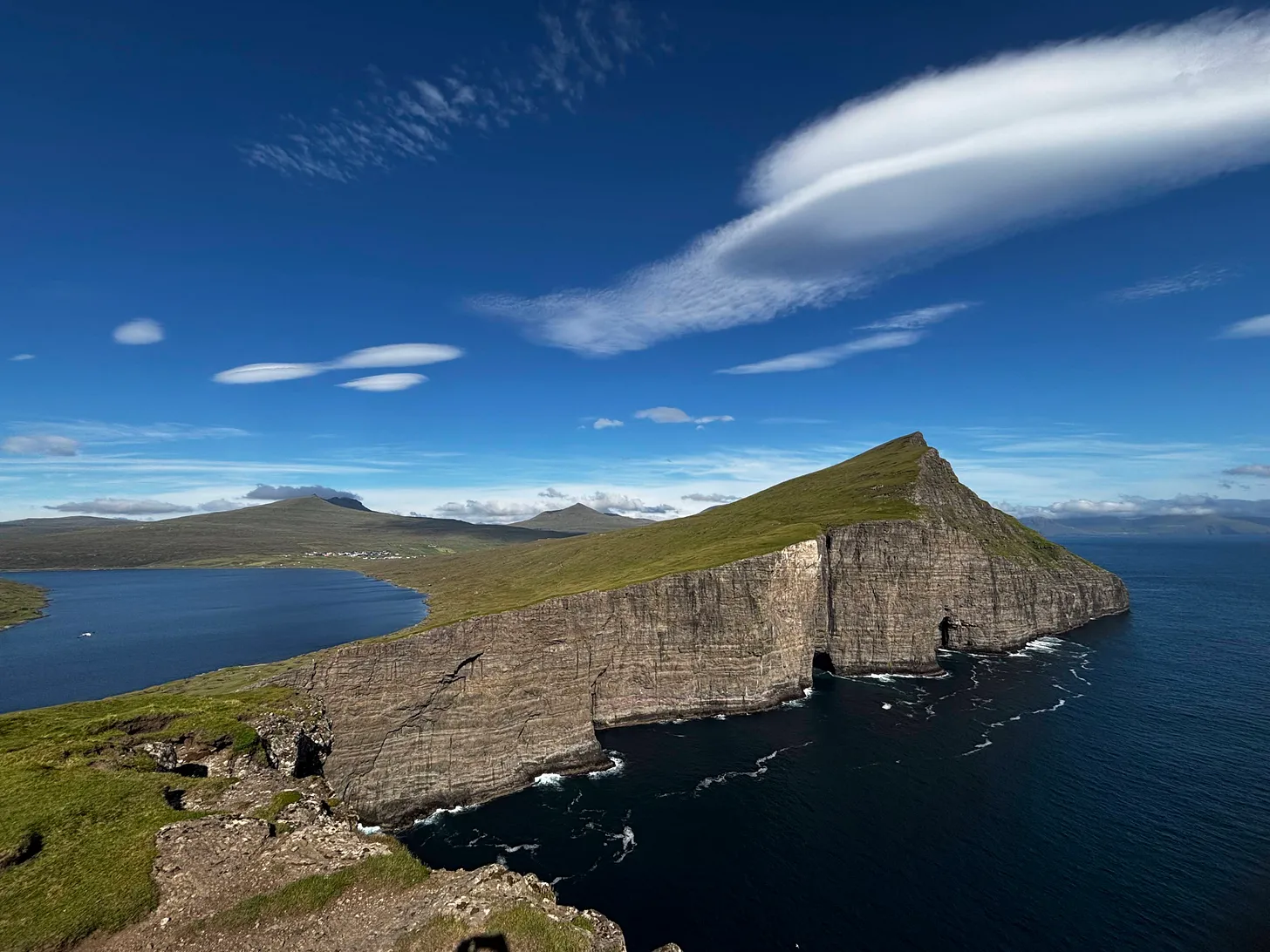
2. In praise of the Faroe Islands - not not Talmud on Substack
This is a really nice post in praise of the Faroe Islands - an archipelago of 55,000 people part of Denmark. It feels like the Faroe folks have figured life out - and wouldn’t we wanna know?
More well known, the Faroe Islands have built impressive and incredibly expensive undersea tunnels connecting all of the major and proximate islands to each other. They spend this money not to make the islands more productive or efficient, but simply because they believe all Faroese people should be connected. The infrastructure exists for solidarity, not optimization. A consultant would call the tunnels and helicopter subsidies a spectacular misallocation of capital. But this misses the point entirely—they’re treating infrastructure as as a kind of social infrastructure, not economic.
3. Shucking the past: Can oysters thrive again? - Knowable Magazine
The Chesapeake Bay is the US’ largest estuary and used to be full of oysters. No longer, due to overharvesting and climatic changes. Can we change that? I learnt a lot of new things about oysters in this piece.
4. Sense and Sensibility: on choosing men - Bookbear Express on Substack
Pretty fun rumination on how women chose men in 19th century literature. It’s also inspired me to read Sense and Sensibility ASAP!
Being able to judge character is a matter of life or death for women in 19th and 20th century literature. Take Emma Bovary, who falls in love with Leon and Rodolphe because she is bored to death of her husband, or Anna Karenina, who succumbs to the charms of Count Vronsky, a fundamentally spineless man. Or Isabel Archer, who chooses the penniless, sophisticated Gilbert Osmond, precisely because he is the unexpected choice, and is punished for her naivety.
5. Will your next EV have a solid-state battery — and improved performance? - Knowable Magazine
“Superionic materials have spawned hope for a new generation of power packs for electric cars, with a promise of greater range, faster charges and more safety. But scaling up won’t be easy.”
This is something I keep track of for work - it’s nice to see recent progress summarized in a pretty easily understandable way. Batteries are a modern marvel, and they continue to get more marvelous.
6. Animal origami: The physics of nature’s folds - Knowable Magazine
This is brilliant! A tiny marine organism called Lacrymaria olor is able to uncoil itself, so to speak, to quickly expand to thirty times its original length to catch food. And how? An unfolding very much like origami!

7. A Mathematician’s Unanticipated Journey Through the Physical World - Quanta Magazine
This was fun - after reading the previous piece on origami, I came across Origami Patterns Solve a Major Physics Riddle which then led to this piece. It’s a profile of Lauren Williams, a Japanese-American physicist who’s done a lot of cool work on geometry - she “proved that the pieces of the positive Grassmannian can be reassembled in a form that explains everything from the movement of tsunami waves to particle collisions at the frontier of quantum physics. It’s a potpourri of insights that cohere around the positive Grassmannian, and around the unique mind that generated them.”
8. Your Life Needs a Press Release - Harnidh Kaur’s Substack
I loved this and am going to incorporate it into my life (both personal and professional). The essay is about the “PRFAQ” - short for press release and frequently asked questions. It was first developed by people working on new initiatives at Amazon - before you got started with anything - you draft a press release of what the final product is going to be - and then you play devil’s advocate by coming up with the strongest critiques and then responding with why this should be done. I like how Harnidh calls this “manifestation’s disciplined cousin”.
9. On Factory Tours. - Scope of Work
I’m really loving James Coleman’s writing at Scope of Work. Here he writes about going to factory tours as a kid and feeling quite inspired by the “journey from awe to understanding”.
Factories, though complex societal artifacts, have an untapped magic that we should be using to encourage young people to build the future we want. Coming out of college, I had never considered working in an industrial environment. I took the interview at McMaster-Carr because I wanted the interview practice, and thought the trip to Atlanta would be cool. But seeing the facility at work — the miles of conveyor, the meticulously choreographed processes, the thinking put into every piece of the puzzle — made me excited to get involved.
10. American Hindenburg - Atavist
OK, wow. I did not know too much about the history of airships and “blimps” beyond the Hindenburg disaster. Turns out that the US also had a lot of activity going on here between WW1 and WW2 - as part of the then nascent military-industrial complex. There were, of course, safety issues, and disasters. That’s what this piece goes into - how the safety risks of airships were steep, ultimately deemed to be unsurmountable in the face of aircraft carriers and airplanes.