Hello there, reader, and welcome to another issue of Kat’s Kable. I have been incredibly busy with work, and thus the midweek issue, but this one I’m especially proud of. There’s a lot of fun stuff to read in this issue. Let me know how you like it!
1. Horseshoe Crab Diary - The Paris Review
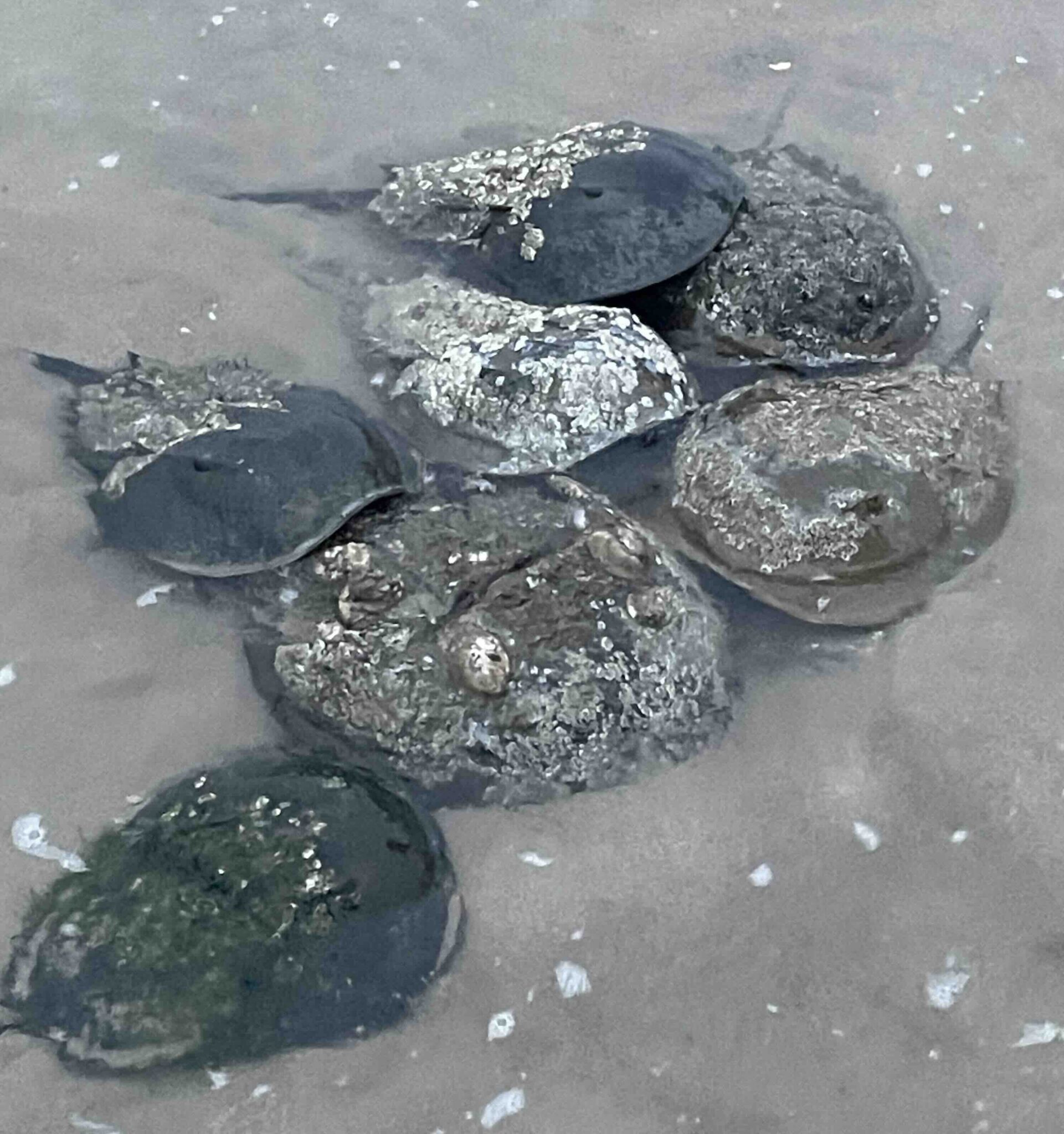
Author Grace Byron writes about her obsession, starting from childhood, with horeshoe crabs - ancient-looking creatures and unlikely-looking crabs. They have been harvested (for lack of a better word) for a while now because of their blood’s special clotting ability - and this makes them a key ingredient in medical research. Of course - humans being humans - the crabs are now threatened and do need conservation. Byron writes about this, about volunteering in New York to do census work for the crabs, and how some geographies have prevented the harvesting of the crabs for their blood.
2. The Scammer Next Door - The Dial
Snigdha Poonam writes about the burgeoning scam economy in India - focusing on a particular scam where callers are told they have won a lottery coming from the Indian PM Modi as well as industrial magnate Ambani and TV/movie star Amitabh Bachchan. Phew! It’s a fun ride to read through Snigdha’s efforts in temporarily becoming a scammer herself for research, but it really does underscore some of the scary aspects of the internet economy we now live in.
3. Financing the Build-Out Era - The Business of Science
Pretty interesting essay on how to finance high-technology manufacturing-focused projects. Similar to The Rise of Production Capital (issue #347) and Capital Intensity Isn’t Bad (issue #363) on similar themes. I like these pieces more these days because they help me quite a bit with my work!
4. Olympic gold is all about doing little things. Abhinav Bindra to Anna Kiesenhofer in Tokyo - The Print
Fascinating article about the things athletes do to make themselves the very best they can be. Abhinav Bindra, the Indian shooter, purchased 10,000 rounds of Chinese bullets before the Beijing Olympics because they performed better; because the Chinese manufacturer wouldn’t sell him any, he had to get it routed via a friend in Hong Kong. The other amazing thing I learnt was that he got himself to go from 15 respiratory cycles per minute to about 5 by the time the Beijing Games came around!
There wasn’t one single isolated element that Bindra did better. It was a sum total of little things that added up to be bigger than the parts. He had followed Kaizen, the Japanese method of continuous improvement. Zen philosophy doesn’t believe in perfectness. It does believe however in striving for it as the only way to be better. Abhinav Bindra is living proof of the fact that it works.
5. The Curious Case Of Sidd Finch - Sports Illustrated
OK OK, you have got to read this. It’s a 1985 article about an enigmatic baseball pitcher, Sidd Finch, Sidd being short for Siddhartha. He could pitch at 150 miles per hour, but wasn’t convinced he wanted to play baseball full time. All of these talents of his come out in the essay, with a pretty big twist too.
Conversations with Finch himself have apparently been exercises in futility. All conventional inducements—huge contracts, […] and so forth—mean little to him. As do the perks (“You are very kind to offer me a Suzuki motorcycle, but I cannot drive”). He has very politely declined whatever overtures the Mets have offered. The struggle is an absolutely internal one. He will resolve it. Last week he announced that he would let the management know what he was going to do on or around April 1.
6. The Third Thing - Poetry Foundation
Touching piece by Donald Hall chronicling his marriage with the poet Jane Kenyon:
What we did: love. We did not spend our days gazing into each other’s eyes. We did that gazing when we made love or when one of us was in trouble, but most of the time our gazes met and entwined as they looked at a third thing. Third things are essential to marriages, objects or practices or habits or arts or institutions or games or human beings that provide a site of joint rapture or contentment. Each member of a couple is separate; the two come together in double attention. Lovemaking is not a third thing but two-in-one.
7. Make Something Heavy - Working Theory
I feel this essay is pretty surface-level but it’s a nice reminder that the internet makes it very easy to make “light” things - tweets, short blog posts, shortform video - but the “heavy” things which take time and break free from the cycle of ephemerality are what give a deeper sense of satisfaction and relevance. I’ve always felt Kat’s Kable to be somewhere in the middle; obviously each issue is a microcosm or a reflection of what’s been written by others, but put together, it’s a pretty nice and substantial body of work.
8. Why children’s books? - London Review of Books
Lovely essay by Katherine Rundell, who writes “non-fiction for adults, and fiction for children”, about the importance of and value of children’s books.
It is the work of a writer for children to do the same for the world itself. Children have not yet built wide hinterlands: to them, the world is still opaque and full of necessary bewilderment. Those who write for children have the chance to point them towards beauty that they do not yet know exists: towards versions of joy that they have not yet imagined possible.
9. The Role of Scientific Outlook in the Development of Science and Society - Jayant Narlikar
Prof. Jayant Narlikar was one of India’s eminent physicists, and served as the first director of IUCAA - the Inter-University Centre for Astronomy and Astrophysics. He passed away earlier this year and requested that this talk of his be shared with his audience. It’s a talk on the importance of the scientific outlook that he gave back in 1976, and it’s very good.
10. Tollywood’s Kingmakers - The Swaddle
Crazy, in-depth, wonderful article about fan groups in Tollywood (the Telugu movie industry) and how important a role they play in keeping movies and fan culture relevant.