Hello there, reader, and top of the day to you! I’m back with a Sunday morning IST Kat’s Kable, and as usual, there are 10 great things to read. I’ll leave you to them without much ado - enjoy!
1. Beloved Bother - Longreads
Hannah Engler writes really nicely about her great-uncle Ronald Kolodzie. Kolodzie was a fashion designer, and a gay person in New York during the time of the AIDS crisis. What’s funny about this piece is the title - Beloved “Bother” - which is a mispelling of what Ronald’s siblings wanted to write - “beloved brother”. This was apparently what led to the writing of the piece in the first place.
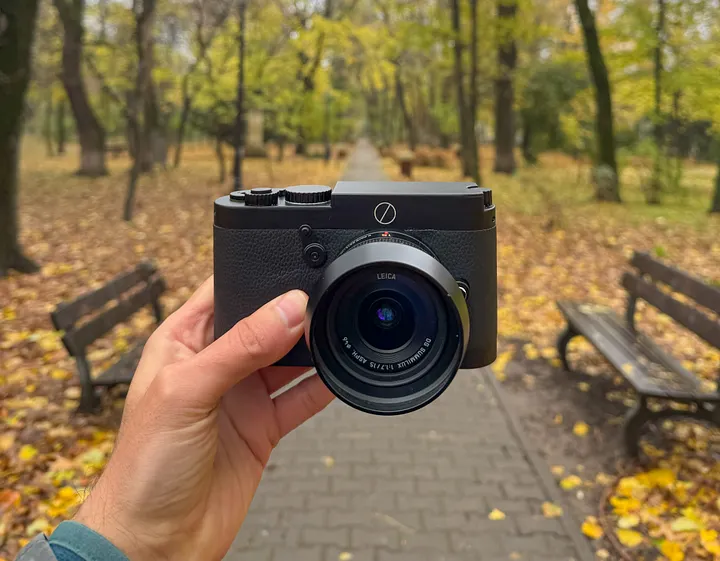
2. I wanted a camera that doesn’t exist — so I built it. - Cristian Băluță on Medium
This is super cool. Băluță wanted to write his own camera software, and ended up making his own camera. This is a pretty detailed write-up about the steps involved in doing this. His camera uses internals from a Panasonic Lumix G9ii, and an imitation body of a Leica camera along with his Leica lens. It’s super cool to see the steps involved!
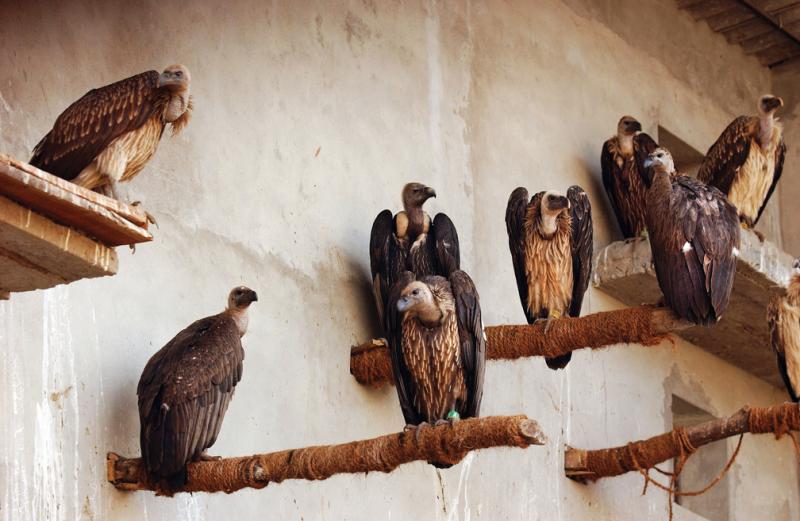
3. India’s Vanishing Vultures - VQR Online
Very detailed, personable and rather sad piece by Meera Subramanian from 2011 about India’s diminishing vulture population. Since then, vulture populations have stabilized and improved slightly, but are still down over 99% (!) from their pre-2000 levels. This piece goes into the reasons for vulture decline (primarily the use of diclofenac in animal husbandry) and efforts across north India to support and conserve vultures in captivity.
4. Gluttons for Punishment - Vulture
Here’s the opening paragraph. I don’t think I need to say any more:
“Professor Justin McDaniel, the tenured chair of the religious-studies department at the University of Pennsylvania, has found a way to make his students read again. They don’t write papers or take tests; instead, he asks them to follow a strict set of behavioral constraints. They must give up their cell phones and other worldly distractions, including, in one course, sex. In his popular class Existential Despair, the students gather one evening each week for seven or eight hours to read an entire book in total silence, then discuss it in a darkened classroom.”
5. 50 Years Ago, He Was an Olympian. At 80, He’s Just as Happy to Finish Last. - New York Times
Jeff Galloway, who I unfortunately hadn’t heard of until I read this piece about him, is a veteran marathoner who was part of the US Olympic 10,000m team in 1972. He still runs (!), in large part fueled by his run-walk-run marathon strategy that’s not only been used by him but by thousands of others. He’s now 80, and after some heart attack setbacks, is trying hard to complete another marathon. It’s an inspiring story.

6. 40 Years Later: Sade, “Promise” - Longreads
Hanif Abdurraqib writes about Sade’s album “Promise” that came out 40 years ago, in 1985. Before reading this, I’d only listened to “Smooth Operator”, but I’m now listening and bopping to “Promise” as I write the newsletter. I love the style of this “review” - more of a “meta”-review than a review per se.
7. Post Artifact Books and Publishing - Craig Mod’s website
Can’t believe this is from 2011! Superb elucidation of what books can become in the digital era. What’s useful is the tripartite framing of the journey of a book: (a) pre-artifact when the book is written and made, (b) artifact system, which refers to the physical book (or its extension) itself, and (c) the post-artifact system where we, as a collective, engage with the artifact. The key insight is that these are three isolated stages in a pre-digital book, but three interconnected ones in the digital era.
8. An app can be a home-cooked meal - Robin Sloan
I shared this piece back in issue #214 (June 2020!) and revisited it in the context of our current “vibe-coding” era. If you want, you can build your very own personalized app in a couple of days (I built myself a personal Goodreads clone, for instance). Robin Sloan’s story of creating a tiny app just for his family to exchange photos and videos is super cute, and I expect we’ll see a lot more of these in times to come. His home-cooking analogy is really good. It reminds me of what I read about vibe-coding recently: making your own software is easy because you have a good espresso machine at home, but you’d want to outsource your software (or coffee) to professionals when you want reliability, consistency, and for you to not need to take care of bugs.
I am the programming equivalent of a home cook. […] The list of reasons to “learn to cook” overflows, and only a handful have anything to do with the marketplace. Cooking reaches beyond buying and selling to touch nearly all of human experience. It connects to domesticity and curiosity; to history and culture; to care and love.
Well, it’s the 21st century now, and I suspect that many of the people you love are waiting inside the pocket computer you are never long without, so I will gently suggest that perhaps coding might connect the same way.
9. King of the Ghosts - n Plus One
I suppose 2026 is (hopefully) (finally) (eventually) going to be the year I read Infinite Jest. This is a 2011 review-of-sorts of David Foster Wallace’s posthumously published novel The Pale King. The reason I call it a “review-of-sorts” is because it’s not just a review of the book, but an overview of the man himself and the context which informs the writing of this book.
10. Inside David Foster Wallace’s Private Self-Help Library - The Awl
Well, well, what do we have here? Another DFW piece - this one is quite illuminating into the kind of person he was, and quite surprising too. He actually had an entire bunch of “traditional” self-help books which he read and marked up quite heavily.