Hello there, reader, and welcome to another issue of Kat’s Kable! I missed last week, on account of… life and generally being busy and occupied. This past week I read something online which has had me feel pretty.. strange. I read a tweet that talked about how random reading, even if books and longform, is not too different thematically from doomscrolling because there’s no agenda to it. It’s better, from the angle of improving oneself, to read with a plan. I don’t read with a plan! I read because it’s fun and I read omnivorously because I’m curious. I know this, and yet I feel a bit strange to be assailed by a comment like the one I read. Well, I suppose it’s true to an extent - but I also don’t mind. I think reading widely and “randomly” is beneficial because you’ll see things you never thought to look for.
As always, ten great things to read - enjoy!
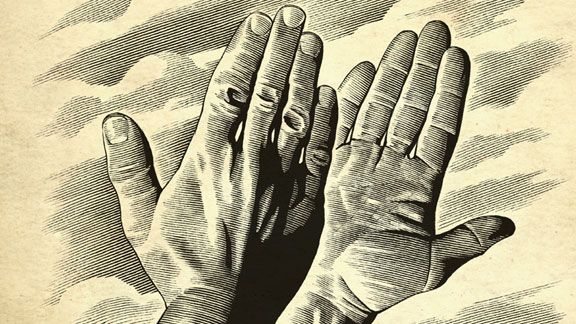
1. The wild, mysterious history of sports’ most enduring gesture: the high five - ESPN
Pretty fun read about the history of the high-five. The “low-five”, done at waist level, became popular after WW2, but the high-five came much later. I didn’t know that there are at least three contentious stories of how the high-five came about!
2. Raising money f*cked me up - Yakko Majuri’s blog
Yakko is a fullstack developer, currently building a startup called Skald - it’s a knowledge base for knowledge work. This post, though, is a raw one about his experience raising external equity funding for his startup, and how that made him feel pressured to grow or guide Skald in a certain direction. It’s an interesting read, in particular because Yakko feels honest to share how he’s being torn in two while trying to combine his vision for the company and his sense of what an investor-funded startup should be like.
3. Can A.I. Generate New Ideas? - The New York Times
This isn’t a longread per se, but an interesting one. There is a large collection of mathematical problems called Erdos problems, and an AI tool by a company called Harmonic has actually solved one such problem not too long ago. Is that cool? Is it not?
The debate over what Harmonic’s system accomplished was a reminder of two consistent questions about the head-spinning progress of the tech industry’s A.I. development: Did the A.I. system truly do something brilliant? Or did it merely repeat something that had already been created by brilliant humans?
4. A History of Large Language Models - Gregory Gunderson’s blog
Absolutely superb read this. It’s long, and it’s rather technical in parts, but if you want to spend an hour of your time understanding how and why transformer-based AI models have gotten to where we are today, you’d be hard-pressed to find a better resource.
5. 2025: The year in LLMs - Simon Willison’s blog
I’m a big fan (like many many others) of Willison’s work, and this 2025 wrap-up of LLM technology is no different.
6. The Possibilian - The New Yorker
David Eagleman is an American neuroscientist and bestselling author. He’s a very interesting researcher and person, and this is true really from whatever lens you use the word “interesting”. He’s done a lot of great work on the subjective relativity of how we experience time:
“Time is this rubbery thing,” Eagleman said. “It stretches out when you really turn your brain resources on, and when you say, ‘Oh, I got this, everything is as expected,’ it shrinks up.”
This is a great bio of him, ranging from some of his formative experiences as a kid and early research to his “religion of one” and calling himself a “Possibilian.”
7. The Web We Lost - Anil Dash’s website
2012 piece by Anil Dash on the evolution of the internet. He talks about the decline of platforms like Flickr (for images), Technorati (for blogs) and the rise of walled garden platforms that want to maximize the time you spend on their platforms rather than its quality, and which don’t like interoperability (allowing you to easily leave or switch platforms). Well - it’s 2026 and the last ten years of social media platforms have been evidence of Dash’s predictions. He’s also written a follow-up: Rebuilding the Web We Lost which I’ve now added to my to-read. You might see it in a future issue too, hah.
8. Using spaced repetition systems to see through a piece of mathematics - Michael Nielsen’s blog
Spaced repetition refers to a system where you systematically question yourself in certain time increments about things you want to remember - as you start to remember something well, you need to remind yourself less and less frequently. It’s a powerful system which I tried to use myself some time ago, but found that I didn’t really need to remember too much. I’ve shared a bunch of Michael Nielsen’s writing in the past, and I revisited this essay of his a couple of weeks ago - it’s about using the concept of spaced repetition to better understand a piece of linear algebra. Quite inspiring honestly.
9. I miss thinking hard. - Ernesto J’s blog
I suppose a lot of people have written similar posts - how using AI tools (chatbots, agents, etc.) are taking away the default mode of “thinking about something”. I found this essay to be super relatable, honestly; Ernesto talks about two traits: the “builder” and the “thinker” - AI tools help with the builder a lot, because you can easily create things, whether it’s an essay, a piece of code, or even a CAD file for your 3D print. The thinking, though, is something you probably want to do yourself, and unfortunately for Ernesto, when the builder’s needs can so easily be met, it’s pretty hard to prioritize the thinker.
10. Manufacturing Bliss - Asterisk Magazine
“A growing community centered on the Bay Area is rediscovering the jhanas, a meditation technique that practitioners claim could upend how we think about the brain — and transform our lives in the process.”
I’m always a big fan of Nadia Asparouhova’s writing - this one is no exception - even though the topic is almost painfully stereotypical. Ha.