Hello there, reader, and welcome to another issue of Kat’s Kable. After what seems like an eternity, I am writing the Kable on a Saturday and scheduling it to be sent to you Sunday morning 8am IST. Good times. I think this week’s Kable is pretty awesome, if I may say so myself.
I used to maintain an IFTTT subscription to manage my reading list and Kat’s Kable flow. It would look for articles I liked from Pocket and Instapaper, move those onto a Dropbox text file from which I’d triage and select articles for each week. Thanks to coding agents like Claude Code and now Opencode, I got rid of my IFTTT subscription! I save articles locally using Obsidian Web Clipper, and have a couple of nifty Python scripts that help me like & archive articles - and then I use my old Python scripts to convert lists to markdown and then to html to paste into Mailchimp. I basically just talk to Opencode now - I hit a keyboard shortcut - speak my instructions aloud - and it does what I need it to.
This has opened up a bunch of possibilities. I think that in a way, Kat’s Kable is boring in a good way - everything is static, it’s essentially just a bunch of markdown or HTML files. This is nice because it helps me (and you) just focus on the words. I do have some fun ideas in mind, though. For example, go to the Kat’s Kable website and ask it to recommend you a random article. Or even better, tell it that you want to spend an hour reading about xyz topic (say, sports) and it’ll give you a list from the archives. The world is my oyster!
1. The History of Xerox - Abort Retry Fail
Abort Retry Fail is a Substack I’ve just discovered that does deep dives into the history of iconic companies. On my list to read for this week is their Sega deep dive. I really liked this profile of Xerox - a company with some storied (and some random) history, so much innovation, and a series of structural bottlenecks that prevented them from commercializing a lot of the cool tech that they developed.
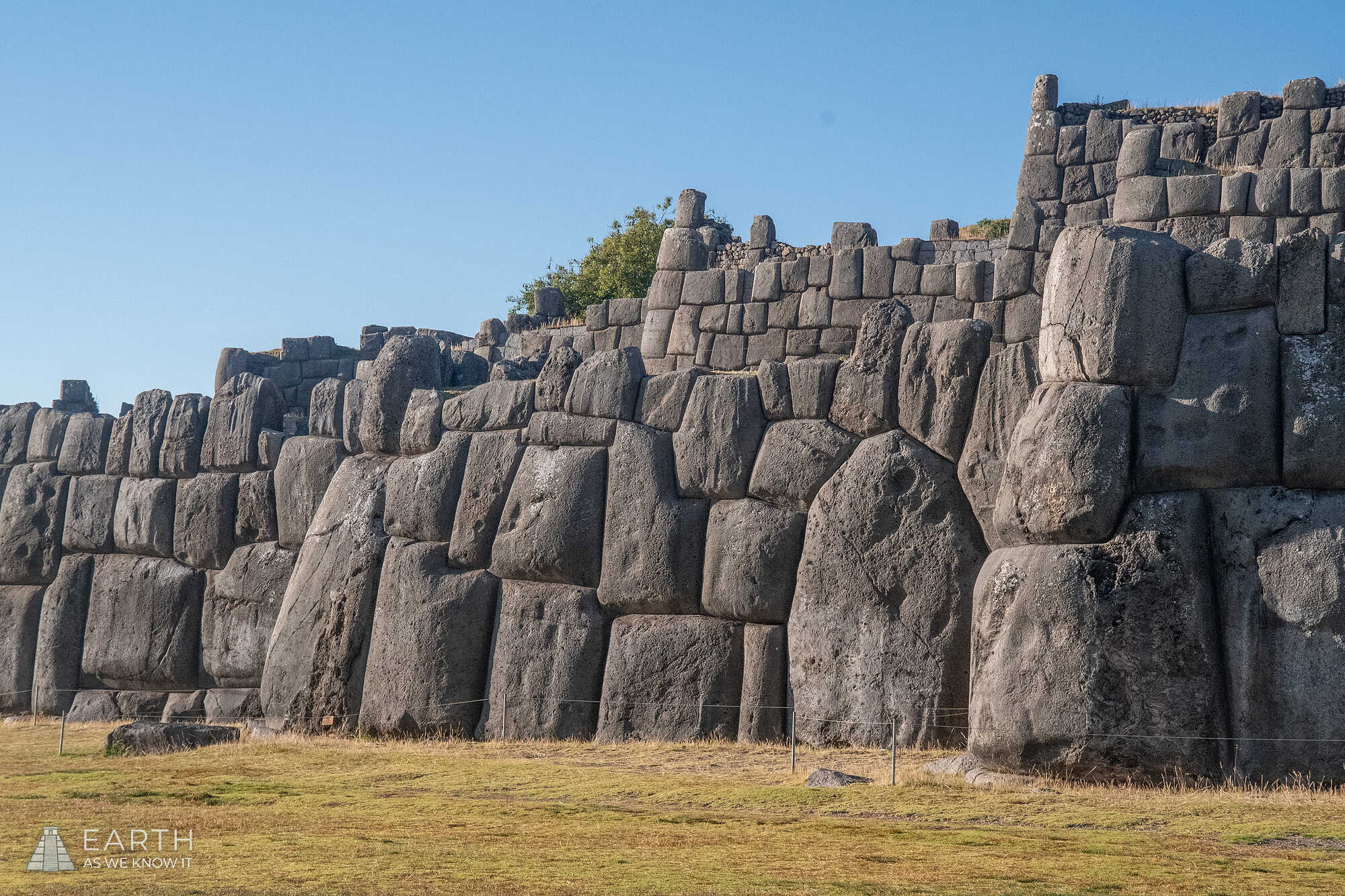
2. Masonry Techniques of the Inca’s Master Builders - Earth As We Know It
Long 45 minute read - but so good! This piece is written in an academic style - and thus is comprehensive, detailed and also addresses “alternative-history” theories of central American stonework (there was an Atlantis civilization before the Incas). I learned a lot about how the Inca stoneworks were constructed, and now have a yearning to go visit. What’s better?
3. Turkey’s Ancient Sanctuary - The New Yorker
Elif Batuman, who I know better for writing the novel The Idiot , writes about excavation projects going on at Urfa, the city believed to be the birthplace of the prophet Abraham. It’s in Turkey, close to the Syrian border, and houses a Neolithic structure called Göbekli Tepe (“hill with a potbelly”) which is estimated to be eleven thousand years old!
The idea of a religious monument built by hunter-gatherers contradicts most of what we thought we knew about religious monuments and about hunter-gatherers. […] The findings at Göbekli Tepe suggest that we have the story backward—that it was actually the need to build a sacred site that first obliged hunter-gatherers to organize themselves as a workforce, to spend long periods of time in one place, to secure a stable food supply, and eventually to invent agriculture.
4. A Defense of Weird Research - Asterisk
“Government-funded scientific research may appear strange or impractical, but it has repeatedly yielded scientific breakthroughs — and continues to pay for itself many times over.”
My commentary on this piece is pretty personal. When I joined my PhD, I thought I would do theoretical research that wasn’t immediately connected with a practical real world application; you never know what the end result is, and so you have to do the fundamental research anyway. I think a little otherwise now, at least personally, but I still do feel like we need “weird research” like this essay says. Even without a tangible goal sometimes - it can still pay itself back multiple times.
5. Fashioned out of air - New Humanist
Gosh, I loved this - meditation on glass as an artistic medium. We are undoubtedly living in a golden age of glass. A material that we have developed so much mastery over in the last century or so. It’s also now a key ingredient in so much of our high-tech environment, even, say, on the phone you might be reading this on. However, the art world does not seem to hold glass-based art in high esteem. That might be changing though.
In a world where our attention is increasingly occupied by images and events behind the glass screen, the material from which that screen is made, with its combination of smoothness and sharpness, liquidity and solidity, depth and surface, can remind us of how dependent we are, despite ourselves, on physical things.
It can thus function as an empirical and metaphorical barrier – the modern equivalent of a looking-glass – between the digital realm and our own. Finally, a key function of art in our image-conscious age is as status symbol and personality extension. In this respect, while some artists may still dismiss it as a medium, glass can surely give bananas, Lego bricks or even paintings a run for their money.
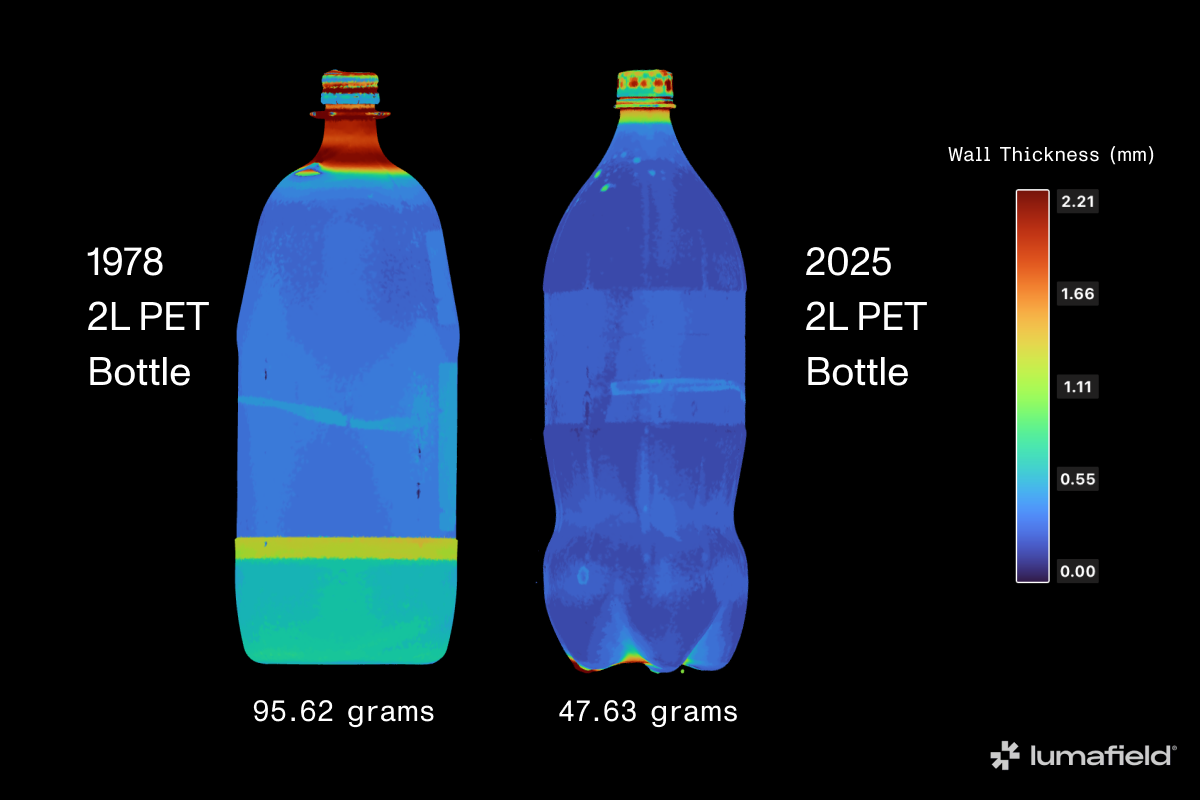
6. Evolution of the Plastic Bottle - Lumafield
I’m pretty happy to have this piece succeed the previous one about glass. This piece, by Lumafield (an industrial CT scan technology company) is about plastic bottles and their history. Very fun - I knew about the revolution of polyethylene and polyethlene terephtalate (PET), but I didn’t know about acrylonitrile and the reasoning behind bottled water being plastic bottle’s “killer application”. Very fun overall. I also like the tenet with which the post starts:
So when I look out at the world outside of my own home, I am reassured to find that even our most disposable objects are the result of staggering quantities of serious and earnest engineering work. You’ve got to give it to humanity: We don’t just put all of our design cycles on the big, impressive projects—pyramids, bridges, and semiconductor fabs. No: We manage to invest embarrassing amounts of engineering and infrastructure into physical objects that are barely worth mentioning. Stuffed animals, given away as carnival prizes, are the beneficiaries of untold logistical and supply-chain management efforts. A pair of pantyhose might contain materials that required eight or nine figures’ worth of R &D work to develop. A plastic water bottle, whose entire usable lifespan is measured in seconds, is the result of decades upon decades of engineering across a range of functions.
7. A Tour of the Private: Traversing the Physical and Memory Landscape of North America - Lithub
It was March 2023 and I was on a Greyhound bus retracing a 2,300-mile journey from Detroit to Los Angeles—a trip I had taken in 2006. As a non-driver, my only options for crossing the continent solo consist of hitchhiking, taking a train or taking a bus. For several years, I’d felt a pull to remake this journey, to revisit the motels, diners, highways, parking lots, towns, cities, suburbs and truck stops. I was curious to see how the places I had traveled through in 2006 had changed, while simultaneously catching a glimpse of the person I had been then. A ragged person running away from loss.
I like this, because I see rereading books as a very similar thing - a way to revisit who I am by walking past old lampposts I’m already somewhat familiar with.
8. The Coke Factory - The Paris Review
I first thought that this article was going to be about coca cola, and then I thought it was going to be about coke.. you know, but it’s actually about coke - what you get when you put coal into an oven. Coke is a huge ingredient in modern industry - because it burns hotter than coal and is necessary for steel production. I loved reading this essay by Turner Brooks about living near a coke factory in New Haven, Connecticut and also seeing it close down. The last paragraph about it closing down is poignant.
After the ovens had been emptied for the final time, the hatches on the ovens’ roof for loading new coal were left open, and whatever remnants the ovens contained were burned off into the atmosphere. The sky filled with sparks and steam. The steam reflected the exposed, glowing embers in a vast orange haze that engulfed the entire place. It was an apocalyptic end; the sky above looked like the charged atmosphere in a J. M. W. Turner painting. By the time the sun came up, all was quiet, except for a slight hissing sound.
9. You’re probably addicted to thinking - Deep Fix on Substack
This is not the kind of piece I’d normally share, to be honest, but I felt it spoke to me right now. The premise is - we are addicted to thinking, to the process of processing things rationally, of introspecting/analyzing before responding, and instead we should be allowing our inner self to come forth easier and do things more… instinctively, I guess. I’ve always envied elite athletes for the way they do this, at least when they play - they are able to keep their bodies so loose and free until the exact moment they need to do something, and when they do something, there’s very little thinking - just doing. The other thing I really liked about this piece was something I do myself as an exercise in mindfulness: how can I do a task as silently as possible? It usually forces me (in an altogether nice way) to pay close attention.
The ordinary moments is where it gets exceptionally good. Early in the morning, when Grace and my son are still sleeping, I unload the dishwasher. And it becomes an adventure… How quietly can the plates land? How does the body know to rotate the mug handle inward without being told? The whole organism conspires together to not wake anyone, and I’m kinda just along for the ride, almost stoned on the elegance of my own hands.