Hello there, reader, and welcome to another issue of your favourite internet newsletter, Kat’s Kable. I come to you with ten great things to read from across the internet, as always, but in a new twist, I am in fact writing this from a bus! I used to have terrible motion sickness, and it’s gotten much better now where I can actually read and write something for over 30 minutes. This week’s issue breaks up into a couple of broad themes - science fiction and predicting the future, risks and funding models for transformative technologies, and some great narrative nonfiction that pulls you into two events from the 2010s that you may never have heard of otherwise.
Enjoy! And as always, feel free to reply to this email if you wanna say hi, tell me that you love the newsletter, or if you think there’s something I should play around with.
1. Why Science Fiction Can’t Predict the Future (And Why That’s a Good Thing) - Reactor Mag
Superb piece by Ken Liu (top-tier sci-fi writer and thinker) on the predictive power of science fiction. Sci-fi, like all fiction, is a function of today’s world more than anything else, and has generally failed to predict the future. Only a few authors have, but the vast majority haven’t. I like the optimistic framing of the argument, though, because if the future isn’t so easily predictable, then it means that it’s more open to be shaped.
2. Sins of the Children - Asterisk Magazine
Enjoyable short story by Adrian Tchaikovsky.
3. Which Future? - Michael Nielsen
I’m a big fan, always, of Michael Nielsen’s work and writing. This essay is the cleaned up transcription of a talk he gave recently at Astera Institute on how to navigate the risks from transformative technology, focusing in particular on the elephant in the room today - artificial superintelligence.
Nevertheless, for good or ill, both this and Rotblat’s example illustrate the way the arc of civilization is ultimately grounded in people who believe in their own moral imagination. We’re going to need many such people, making good choices, if we’re to develop ideas and institutions to navigate any posthuman transition, and solve the alignment problem in an ongoing way.
4 & 5
The Innocent Man, Part One & The Innocent Man, Part Two - Texas Monthly
Phew. These two pieces took me an hour+ to read in total, but they were so gripping. Put together, this was voted as one of the best pieces of longform journalism of 2012 (attentive readers will spot a trend here). It’s about Michael Morton, who spent 25 years wrongfully imprisoned for his wife’s murder. It’s a lot, and it’s incredibly moving.

6. Wikipedia And The Death Of The Expert - The Awl
It’s always funny to read these “pre-AI” pieces. This 2011 essay on the rise of Wikipedia is pretty nice. It talks about the decentralization of our narratives.
There’s an enormous difference between understanding something and deciding something. Only in the latter case must options be weighed, and one chosen. Wikipedia is like a laboratory for this new way of public reasoning for the purpose of understanding, an extended polylogue embracing every reader in an ever-larger, never-ending dialectic. Rather than being handed an “authoritative” decision, you’re given the means for rolling your own.
7. Code is cheap. Show me the talk. - Kailash Nadh’s blog
Kailash Nadh is the CTO of Zerodha, and one of my favourite people in tech (both India and globally). In this essay he talks about AI-assisted “vibe-coding” and how software development as we knew it is fundamentally done. Linus Tolvards (inventor of Linux) earlier quipped, “Talk is cheap. Show me the code.” and we are now in an era where it’s actually all talk and very little code.
8. The Fight For Slow And Boring Research - Asterisk Magazine
I thought this was really cool. Science in the US, and in particular fundamental science research, has been funded by federal agencies. Now that that seems to be drying up (a topic for a whole different discussion), philanthropic capital may be stepping in. This capital, though, needs a different sort of approach to secure - more focus on intermediate research milestones, more public-facing communication, and more. Universities will have to equip their researchers to be able to access this sort of funding.
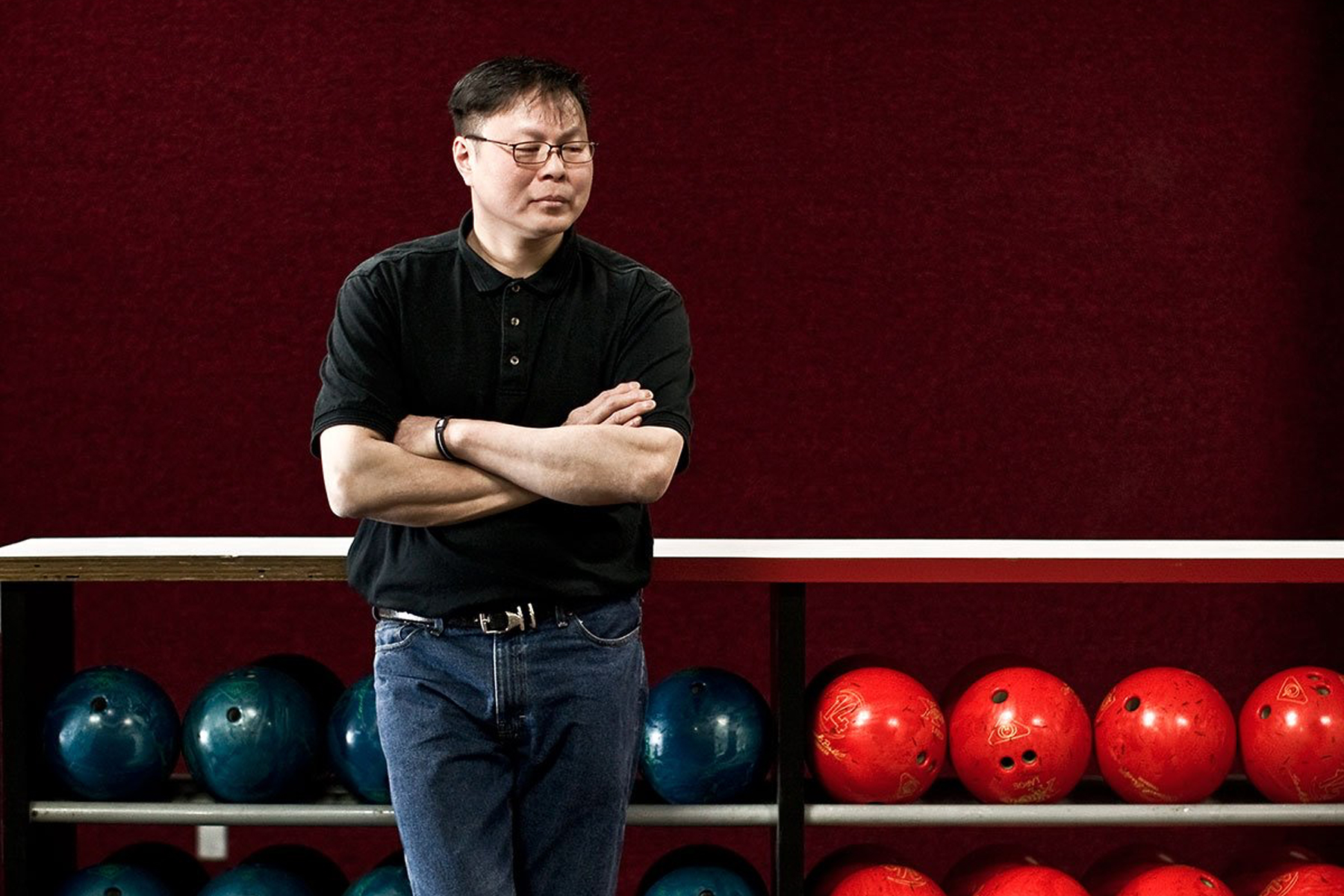
9. The Bill Fong Story: aka the Most Amazing Bowling Story Ever - Dallas Magazine
Wow! Bill Fong, a bowler from Dallas, Texas, was regular at his local bowling alley, and one day, he bowled the most amazing game. Bowling all strikes in a game gets you to a score of 300. 300s, though, are reasonably common (or at least not rare). Three games of 300, though, to get 900 - that’s rare. That’s what Bill Fong chased, and I absolutely loved the way his story’s been written.
10. Can You Optimize Love? - The New York Times
Phew. Almost painfully funny to read - a Silicon Valley approach to love and matchmaking. Can you algorithmically pair people (people already are, in fact) and can it work?