Hello there, reader, a very good morning (or evening) to you. This is Vishal and I’m back with another midweek issue of Kat’s Kable. I was traveling (for a bunch of very fun family events!) this weekend and hence no Kable. I could’ve done a full circle by writing this issue on the way back from the airport (the previous one was written on the forward journey) but alas, Sunday nights are not made for that.
As always, ten great things to read. Enjoy!
1. The Just in Case Obituary, 2026 - Nerd’s Eye Review
Pam Mandel, a writer, is just past the age of 60 and talks about obituaries - “other people’s version of your best self; they’re how other people think you’d want to be remembered.” She also says - if you don’t tell them, how will they know? And then in a fun exercise I enjoyed reading, she pre-emptively writes her own.
2. Why retired husbands worry wives and economists - Times of India
A fun column by economist Abhijit Banerjee about retiring, or even being forced to retire, when you have a job you love, how this is somewhat becoming policy in some countries around the world, and retiring at ~60ish with today’s lifespans is becoming a serious economic problem for some countries.
3. Seeking the Productive Life: Some Details of My Personal Infrastructure - Stephen Wolfram’s Writings
I generally enjoy reading about people’s work and tech setups - thus my fondness for blogs like Uses This. Stephen Wolfram (creator of the Wolfram Language, Wolfram Alpha and Mathematica) who is the CEO of Wolfram talks in almost excruciating detail about his physical (desk, monitor, computer) and software (all Wolfram tools) setup. There’s a lot going on, and unless you’re a hardcore fan like me, you may not want to spend 30 minutes (!) reading the whole thing.
4. Teacher, Leave Those Kids Alone - Time
Phew. This is a 2011 piece about Korean hagwons - after-hours tutoring academies for high-school students looking to get into highly selective universities in their undergrads. Here’s a staggering fact - around the time the article was written, 2% of South Korea’s GDP went into private tutoring. 2%! Incredible (and insane) number. Government employees and authorities are implementing steps (including raids and curfews) to prevent late-night tutoring sessions from happening. Fundamentally, though, this happens because of (a) parents and (b) similar to India, S. Korea has very few top-tier universities that pretty much all the kids apply to.
5. The Adolescence of Technology - Dario Amodei
Well, I guess if you haven’t read this yet, you should? I don’t know. It’s a long read (~30-45 mins) by Dario Amodei, the CEO of Anthropic, and is presented as a sequel to his earlier essay Machines of Loving Grace. Amodei talks about the big risks coming from a “country of geniuses in a datacenter”-level of artificial intelligence, and soberly points out that we need guardrails, regulation, alignment, and such. It’s a sobering read but I will also say that while I think Amodei is pretty articulate and tries to be objective, he’s also the CEO of a frontier AI lab and it’s in his interest to state (even overstate) the advanced capabilities of products his company makes.
6. The Honor System - Esquire
“Stealing magic has become a commonplace crime. Teller, a man of infinite delicacy and deceit, decided to do something about it.”
I learnt about some very artful magic tricks in this essay, but I also learnt about the system magicians use to protect and defend their work, and the rare cases when they legally prosecute other magicians (usually amateurs) who reverse-engineer or copy the trick. It’s weird - I understand you want to protect your trick, but it’s not very natural to me to think of it as a piece of intellectual property in the same spirit as a play, or a book. Very enlightening nonetheless.
7. Holding Breath In A City That Never Pauses - Outlook India
“The acts of breathing in and out become compositional devices—intervals through which rhythm and exhaustion surface as material conditions for speaking and being.”
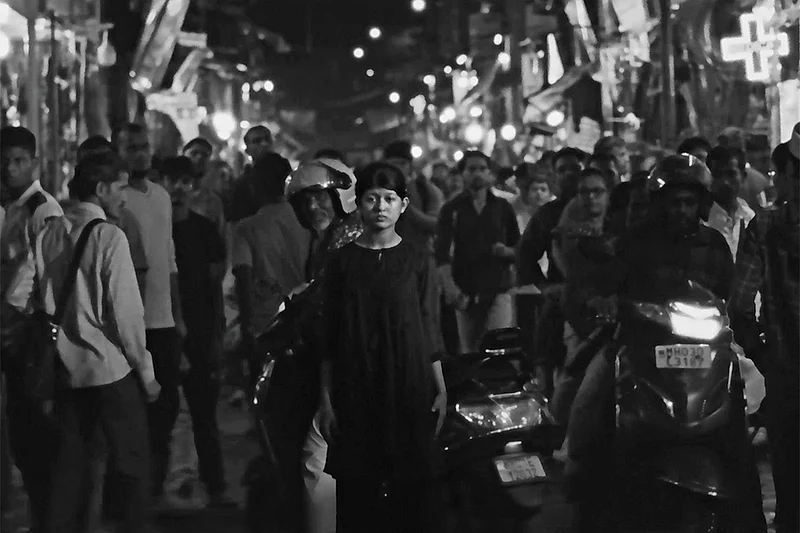
Sudarshan Shetty writes about his film A Breath Held Long , where he uses a mostly still gaze to capture and witness Mumbai - a city pretty much always in motion.
The human instinct to act or perform in the world must be deeply connected to the idea of desire. A desire to be elsewhere. The elsewhere place, fuelled by an urge to bridge the gap between what is and what could be, can be both within and without. It could be located in a private cosmos, where the mind performs without a physical trace—it is a possibility for ‘fiction’ to be realised and to narrow the distinction between what is real and what is not. That’s the territory or non-territory in my film A Breath Held Long, which refers to many imagined territories that point to various personal states within one’s subjective universe and explore the intersection between voice, body and the city and the act of breathing as a metaphor for life within an urban landscape.
8. From the Hands of the Makers - Harvard Museum of Natural History
This is actually incredible!
“Over the course of fifty years, Leopold and Rudolf Blaschka, father and son, continually experimented with materials and methods that pushed the boundaries of glassworking. After his father’s death in 1895, Rudolf continued to refine glass formulations, experiment with pigments and varnishes, and create his own palette of colored glass enamels.”
Just look at the pictures - it’s all glass and natural materials and glue. Flabbergasting levels of artistic creativity and competence. Can you believe that the stem and leaves in this are made of glass?


9. Darwin the Witness - Aether Mug (Marco Giancotti’s blog)
I read this piece and then realized it’s part four (of five parts) about Charles Darwin. Needless to say, I’ve added the remaining pieces to my reading list, but this one itself was so good to read and a must-share.
Half-unwittingly, Darwin immortalized a fast-transforming world—customs, political situations, and ways of life that were both new and just about to vanish into mostly-unwritten history.
While reading the Voyage, I was bewitched by these testimonies. It feels like catching vivid but fragmentary glimpses of the past, as if through a shaky old telescope.
What’s super cool is also the fact that Darwin’s ship, the Beagle , was stationed very close to Concepcion, which was the epicentre of a massive earthquake. His observations are used even now to improve and backtest seismological models.
10. What Makes A Great Critic? - The Awl
Nice 2011 reflection on the acts of reviewing and critiquing. The primary point addressed by the piece is the fact that media houses are prioritizing boring reviews - essentially protecting the “establishment” and the established entertainment industry. It’s probably more fun to have more provocative, scorching and exciting reviews - but we don’t really have those.