Hello there, and welcome to another issue of Kat’s Kable! This is Vishal and as always, I come to you with ten great things to read. You might notice some cosmetic changes. Sprucing up the email template was on my todo list for quite some time, and I’ve finally gotten around to doing it. Let me know what you think! The desktop experience shouldn’t be too different but it should be far better on mobile.
Another really exciting thing - you might have seen a screenshot of my writing plugin for the Kable that I vibe-coded. A key part of that was converting the entire Kable archive into a vector database. That can be used in a number of fun ways, one of which is to start at a random article, and have it navigate to similar articles on a graph. Try it out here.
It’s a relatively large file, because I just included the entire vector/embeddings database into the HTML, so it may take a minute to load. It’s also far more satisfying to use on desktop.
Well, that’s all. Tell me what you think. And as always, enjoy the ten things to read.
1
Why Dark Skies Matter
Earth Island Really nice longread about a night sky sanctuary in Montana in the US. The Medicine Rocks State Park is a designated Dark Sky Sanctuary, one of only 23 designated by the international organization DarkSky International. In an era of so much light in all our urban centres, this feels like way too small a number.
I’m also persuaded to deepen my understanding of the word sanctuary as it applies to Medicine Rocks and other places recognized by DarkSky International. Dark-sky places play a vital role in protecting thousands of animals and vast ecosystems, but I realize it’s a mistake to think of protecting the dark in the same way we think of protecting land or wildlife. Whereas miraculous creatures and their habitats have mortal limits and can be extinguished, the dark is boundless and can only be obscured.

2
Hiroshima
The New Yorker I recently came across this 1946 piece by John Hershey that profiles six survivors of the Hiroshima atomic bomb blast. It’s.. well, it’s a lot. But it’s also very much worth a read - the way Hershey pieces the story together, and combines the inhumanity of the event with the very human ways in which his subjects react - phew. It’s going to take you a solid hour+ to read, so get a cup of tea and sit down with it.
3
Making It In Bollywood
The Dial A recent piece by Taran Khan on “strugglers” in Mumbai, India, and how their lives are structured in their quest to break into Bollywood. Similar to the previous piece - this one brings out a sense of struggle while also humanizing the people involved.
I asked Yusuf if over the years he had lived and struggled in Mumbai, he had every got tired of trying. “Please try to understand, I am not trying. Are you trying to breathe? No, you are simply breathing, right? Like that, I am already acting.” I asked how he was so sure he would make it. “How are you so sure it’s daytime?” he asked me in return. “Because I can see it,” I ventured, and watched his face break into a smile. “Exx-actly,” he drawled triumphantly. “I can also see it.”
4
We need better stories about the future.
Ashley Mayer’s Substack Thought-provoking piece I read just this past week about narratives in tech and startups. In the US startup world, AI has sucked up pretty much all the attention and capital, and the narrative coming out of it isn’t necessarily a super positive one. Mayer says that startups, apart from their job of creating whatever product they aim to, have a duty, or a primary narrative objective: “to give people a reason to root for the future.” She then talks about how startups, particularly early-stage ones, are far better placed to drive this narrative than any other companies or organizations.
5
Ketchup Isn’t as American as You Think
Slate Fun read into the origins of ketchup - a word that originally meant fish sauce in a dialect of the Fujian province in China. Its Western expansion started in the 1600s, and actually only because it was tightly coupled to “arrack” - a distilled spirit made from fermented red rice. As this “Bavaria arrack” started to become a popular export, colonial and merchant visitors began to get a taste of the ketchup - and thus well, you have ketchup with your fries. Another interesting point in this essay was that the Chinese were the pre-eminent economy + country until the Industrial revolution, a topic that I need to read more about.
6
What It’s Like to Brainstorm with a Bot
New Yorker Very optimistic (and thus nice!) view on bringing LLM-based AI into academic research:
Will there be ideas that we miss out on because we’re using machines? Almost certainly, but we’ve always missed out on ideas—owing to distraction, fatigue, or the limits of a single mind. The real test isn’t whether we miss fewer ideas but whether we do more with the ones we find. What A.I. offers is another voice in the long, ongoing argument with ourselves—a restless partner in the workshop, pushing us toward what’s next. Maybe that’s what it means to be “always working” now: turning a problem over and over, taking pleasure in the tenacity of the pursuit, and never knowing whether the next good idea will come from us, our colleagues, or some persistent machine that just won’t let the question go.
7
Fried Fish & Family Affairs
Bitter Southerner Phew. This was a super fun family story longread! It’s about a family with a plot of land at The Shore, the southern tip of the Delmarva Peninsula or the eastern tip of Virginia, USA. It’s a land with a long history and this piece brings it out so nicely.
We didn’t live at the farm right away. After six years of weekend visits and sandbar summers, we moved from Northern Virginia to the Shore full time. Not being born there made us “come here’s.” “From here’s” can trace family lineage back through generations of watermen and farmers, with an accent that’s not quite a deep Southern drawl, but rounder and softer, drawing from lifetimes living in harmony with the tide’s ebb and flow. The dialect has a British tint to it, a bit of a closed-mouth mumble. Oysters become “orsters,” driving south becomes “goin’ down de royd.” The moment boats can navigate shallow waters becomes “hoi toide.”
8
Watch It Burn
Atavist This essay’s subtitle is “Two scammers, a web of betrayal, and Europe’s fraud of the century.”. Would you believe it if I then told you that this was a VAT (value-added tax) fraud dealing in… carbon credits? The financial instruments that came from Europe’s “cap-and-trade” policy to incentivize companies to emit less or to pay a penalty for a larger carbon footprint? Wild. Thoroughly enjoyed reading this but was disturbing as to how a well-meaning scheme essentially did nothing and just emptied government coffers into scammers’ hands. One could also argue that this was essentially the “free market” demonstrating the pointlessness of the scheme.
9
To Steal a Whale Bone
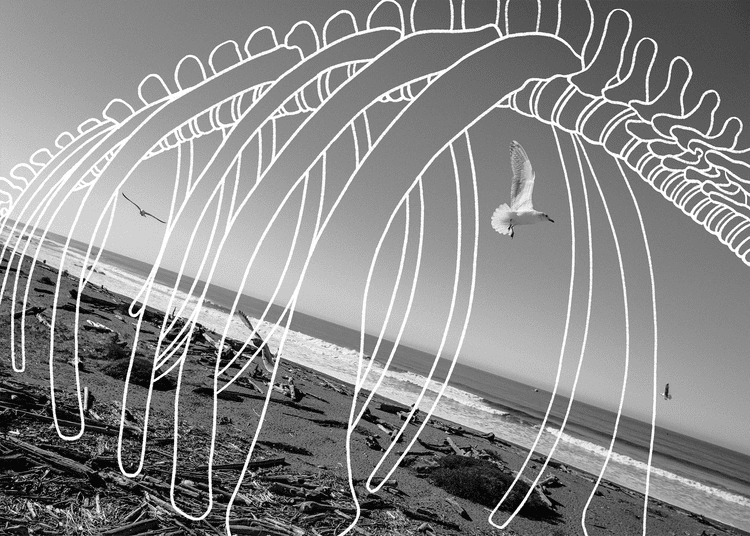
Switchyard Magazine Few places command the democratization of discovery quite like the intertidal zone. On the Long Beach Peninsula in Washington state, there’s an unspoken understanding that any found detritus is fair game. Everyone looks for treasure. Across the wrack line of high tide, people comb the scattered ephemera, swing metal detectors, gather flotsam, hold sea glass up to the sun. Over the last three decades, I’ve returned to the peninsula hundreds of times, though I never discovered any real riches until I met the whale.
10
Autistic and Seeking a Place in an Adult World
New York Times “Justin Canha, a young artist with autism, prepares for life as an independent adult.” This is Justin’s story, superbly supported by the coordinator of a then-new “transition-to-adulthood” program for special education students. This piece brought out a lot of feelings in me. I felt very hopeful, but also felt a sense of, “this is a good start, but I don’t know if this sort of program is the best way to do this”?