Hello, and welcome to another weekend issue of Kat’s Kable - your favourite newsletter where I, Vishal (aka Kat) share ten great pieces of longform journalism with you.
This week has been marked by a wonderful quality-of-life improvement. I have upgraded to a sit-stand desk at home and boy, are my hips thanking me already! It’s been wonderful to switch from sitting to standing in the matter of half a minute. I got it at IKEA last weekend, and much of this week’s Kable was also read during my to-and-fro transit yesterday :)
I’m continuing to tweak the recommendation system I built for myself when writing the Kable (a small plugin that suggests similar articles from the archive when I’m writing a new issue) and I’m getting into “I’m improving this to have fun and not necessarily because it needs improving” territory - going back and forth with coding agents is quite fun, honestly. I’ll write about this in more detail later, but one thing I’ve been thinking about is that for me, “agentic AI” has meant more agency for me - I can do what I want to do by just describing it, and I do! Last evening I had a fun idea while getting a haircut - I’m letting it sit in my head for a day or two and then I know that I can just get a coding agent’s help to bring it to real life.
As always, enjoy the ten things to read, and if you want to write back to me, all you need to do is reply to this email :)
1 Time to bake a manly loaf of sourdough bread - Aeon
Another super fun article that Samira shared with me - this is about the fun and tactile feelings of baking your own bread. What I liked is the author touching upon is that fermentation means you commune with beings on novel timescales for us. I also wrote about this once on my blog - Fermentation and timescales.
When you are in a relationship with time, you are in some sense meditating; the repetitive physical process of kneading (or, for the Lepard-ite, kneading and reshaping, kneading and reshaping) leaves your mind wonderfully uncluttered and attentive. You are working at the loaf’s pace, and you draw from it exactly the satisfaction that fishermen draw from fishing.
2 I Made the “Next-Level” Camera and I love it - The Libre
This is superb! I honestly did not understand everything, but let me give it a shot - Niccolò Venerandi wanted to make a big lens for his camera - so he could have more parts of his photograph out of focus, and thus increase the separation between the subject and the rest of his camera. This is the camera that inspired him:
SCREENSHOT
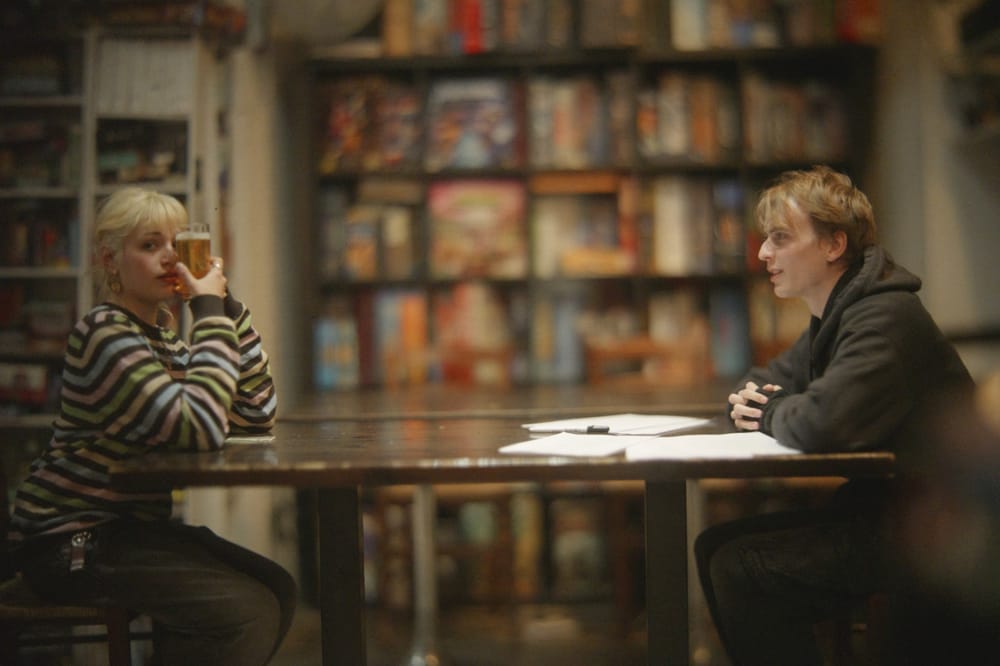
And pictures from this lens look like this:
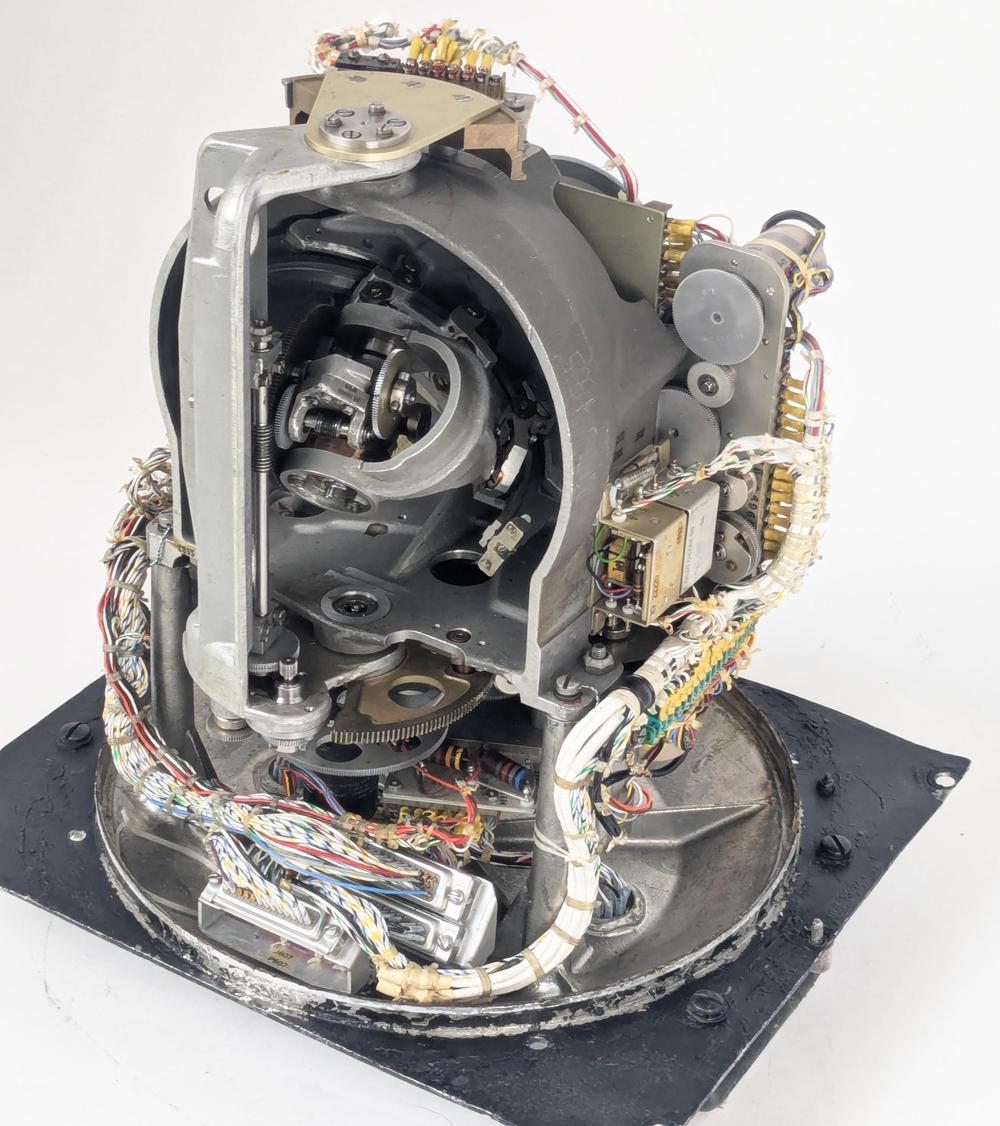
3 The electromechanical angle computer inside the B-52 bomber’s star tracker - Ken Shirriff’s blog
Another very fun hardware build/analysis. The B-52 is the world’s most advanced stealth aircraft (and bomber). It was built in the 1960s, which is pre-GPS. So how did the aircraft navigate? It used what’s known as celestial navigation: “navigating from the positions of the stars, planets, or the sun”. It required this super complicated mechanism to make it work, and I loved nerding over the details and intricacies here:
Two earlier super fun shares from Shirriff: The Pentium as a Navajo weaving from issue 340 and Inside the tiny chip that powers Montreal subway tickets from issue 341.
4 The $15B Industry You’ve Never Heard Of: Subsea Inspection - Alexa Kayman’s Substack
I enjoyed this deep dive into the last 250 years of hull inspection, and how it’s evolved both as a technology (lots more robots and automation) and as a commercial industry (not changed much honestly!). I learnt a lot.
5 Rattlesnakes at My Door - Oxford American
Phew.. this is a long and very, very fun read. It’s about snakes, of course - so if you don’t like snakes and descriptions of them, move on :)
Elsa Pearl talks about moving to a rural plot of mountainous land with her husband and dog, and finding lots and lots of rattlesnakes. After the initial response (culturally conditioned, of course) of wanting to kill them, they settle into a rhythm of living with the snakes. And it’s so delightful? I read this piece last weekend on a Metro train to IKEA, and it made up for standing pretty much the entire way.
Anyway, the snakes appeared and we adjusted. No, we appeared and the snakes adjusted, enduring our chickenwire boundaries, anthropomorphizing, and ogling. Timber rattlers can live more than thirty-five years in the wild, so I imagine these big snakes had been sunning on this abandoned porch for a long, long time. And I’d rather have them on the porch than hidden all around in tufts of high grass and behind car tires, where we would all surprise each other. It’s not the best situation in the world, but I find that I prefer their company to most people’s. Maybe I am an ahole—just a different kind, in the wide range that’s drawn to these long-suffering, placid creatures.
6 State of the Species - Orion Magazine
Great piece by Charles Mann from 2012 (from my not-so-secret trawling of Longreads best-by-year lists).
Our record of success is not that long. In any case, past successes are no guarantee of the future. But it is terrible to suppose that we could get so many other things right and get this one wrong. To have the imagination to see our potential end, but not have the imagination to avoid it. To send humankind to the moon but fail to pay attention to the earth. To have the potential but to be unable to use it—to be, in the end, no different from the protozoa in the petri dish. It would be evidence that Lynn Margulis’s most dismissive beliefs had been right after all. For all our speed and voraciousness, our changeable sparkle and flash, we would be, at last count, not an especially interesting species.
7 What’s Happening to Reading? - The New Yorker
Interesting piece about what’s changing with our reading habits as an entire society right now. Of course - there’s a big gap if you just consider the pre- and post-internet times, and a lot of people have written about. This piece talks about reading in the age of AI - and the point Joshua Rothman makes is that in the age of AI - getting personalized, paraphrased versions of things is going to get more frequent. We’re going to engage less and less with primary sources (it feels weird to call a book a primary source) and more with AI-summarized or rewritten versions. It does end on this relatively optimistic note:
Text may get treated like a transitional medium, a temporary resting place for ideas. A piece of writing, which today is often seen as an end point, a culmination, a finished unit of effort, may, for better and worse, be experienced as a stepping stone to something else.
8 What technology takes from us – and how to take it back - The Guardian
Nice companion to the previous piece - Rebecca Solnit talks about Silicon Valley giving us a life void of connection. We communicate a lot with chatbots, avoid the friction of communication and community, and the concept Chip Ward coined called “the tyranny of the quantifiable”. Hard relate! I went down this path too a few years ago - optimize everything, put it into spreadsheets (even something like the time at which I drank every cup of tea). This philosophy of maximizing having while minimizing doing takes our relationships away from us. I loved this framing.
9 Caballo Blanco’s Last Run: The Micah True Story - The New York Times
Wow? Wow. Another 2012 piece - this is about Caballo Blanco, aka Micah True - an amazing long-distance runner and a deep and complex person. This story is about his life, but also his disappearance and eventual death while on a trail run. Such an evocative piece, and I’m glad I got to learn about Blanco.
His death was terribly sad, and yet there was also perfection about it.
Micah True died while running through a magnificent wilderness, and then many of his closest friends came together to search for him, stepping through the same alluring canyons and forests and streams, again and again calling out his name.
10 Lords of the Ring - Harper’s
Joshua Hunt writes about sumo wrestling. I fully enjoyed it. Pair this with Sea of Crises from issue #367, and The Sumo Matchup Centuries In The Making from issue #37 (almost 10 years ago!). This particular piece talks about the cultural politics of sumo wrestling - seen as Japan’s national sport, sumo wrestling is now dominated by outsiders. Of the last 8 wrestlers to earn the title of yokozuna (grand champions), six have come from Mongolia.
