Hello there, reader, and welcome back to another issue of Kat’s Kable. I come to you with ten great things to read from around the internet, per usual. I’m on vacation with family this weekend, but have found the time to write this on a rainy Saturday afternoon so it can be speedily sent your way Sunday morning. There’s a lot of fun, fun stuff in today’s issue - whether it’s fun facts and stories about birds, serious personal essays about family and racial identity, or fantastical and satirical pieces to lighten the mood.
My AI journey with the newsletter continues - I’ve been making vibe-coded updates to my Obsidian plugin that helps me surface old articles that are similar and can possibly be mentioned, and I’ve started getting help from Claude when it comes to picking out which ten pieces to share (out of a shortlist of ~30) in each issue. I think it’s all working well, which for me means it’s doing things I’d have liked to do anyway but didn’t, and at the same time not adding any sort of “layer” between you, the reader, and me, your curator.
1 Bird brains - Dhanish Semar’s website
I enjoyed this whimsical piece on the size of different birds’ brains. Some birds are indeed not very smart, in which case “bird brain” would be an insult - but many birds, particularly corvids and parrots, are spectacularly smart. They can recognize themselves in a mirror, pass a delayed gratification test, and even maintain a large vocabulary.
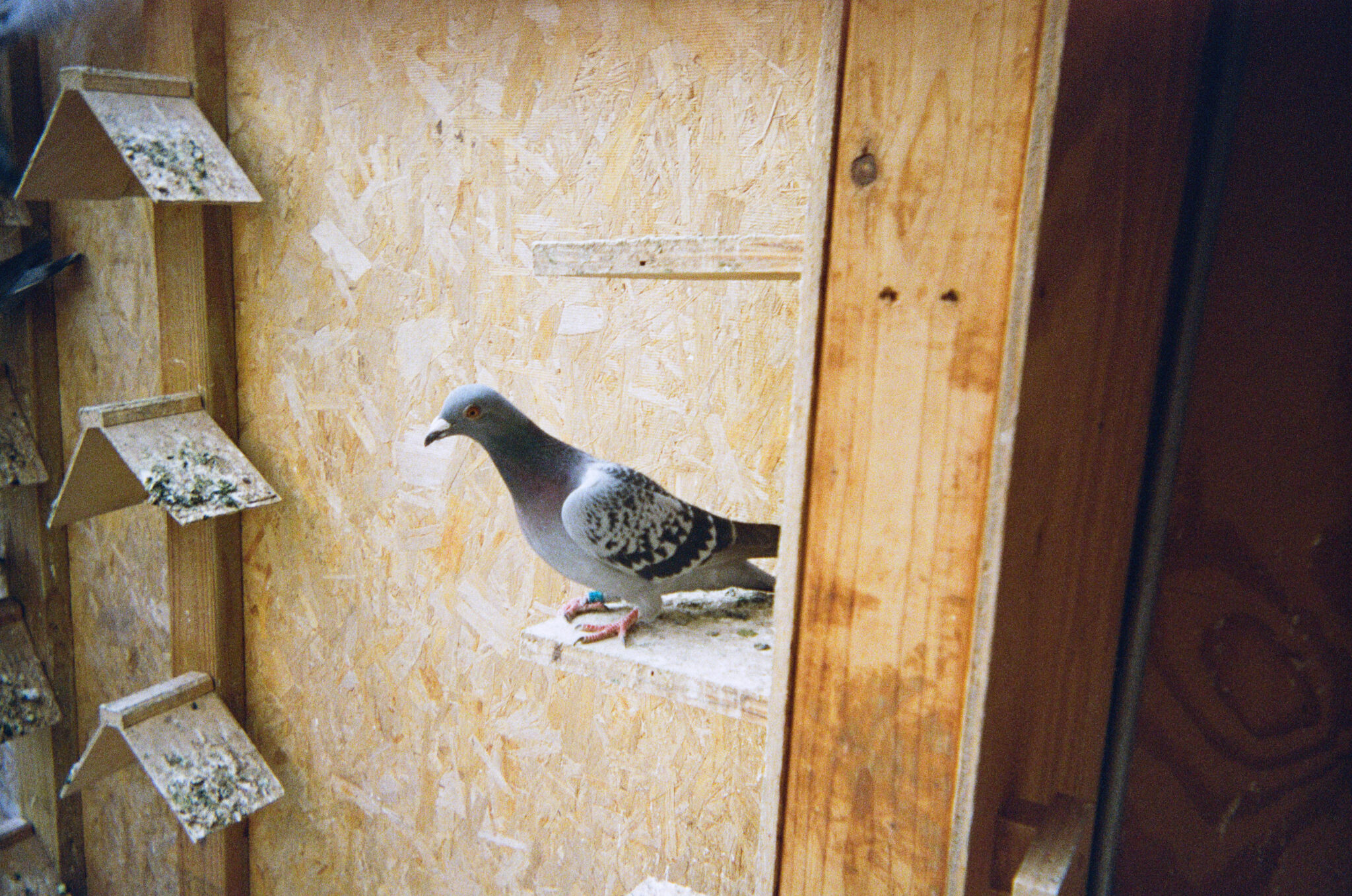
2 Homeward Bound: On Pigeon Racing - The Paris Review
More bird stuff, and wow, this was super super fun by Oliver Egger. He talks about the pigeon racing culture in the US and in particular a race that over 1800 pigeons do from a town called Coon Rapids to various homes and home bases in Chicago. It’s wild! I can’t relate to much of it - but I found the people involved quite endearing - whether it’s Crazy Al (the 78-year old president of the American Racing Pigeon Union) or Andy Waclaw, one of the top pigeon fanciers in the country and has raised arguably the most award-winning bird in US history, called Miss America.
3 Any garden I love must be wild - Aeon
“It might be a piece of paradise, a refuge from urban mayhem – but can a garden embody something deeper and wilder?”
I really enjoyed this - I like gardens and I want to think of them as something we control as stewards, but also places where the wild can express itself. This essay by Emma Miller brings a bunch of these ideas out, and I found myself nodding a lot as I was reading it.
4 Meet the mysterious electrides - Knowable Magazine
Oooh - I learnt about electrides this week. They’re alternate states of matter that metals can enter where they change their behaviour (change from conductors to insulators) and can also suck up other elements in their structure. Their presence in Earth’s mantle and core has helped explain certain anomalies in the low percentage of light elements in our crust, and we are also getting into an era of harnessing this state of matter to design better catalysts for super-important industrial activities like the Haber-Bosch process.
5 Screeching sound of peeling tape - Physical Review E
I don’t think i’ve ever shared a paper on the Kable before - but this one is quite fun. Just read the abstract:
The screeching of peeling tape is a familiar albeit annoying sound. However, despite decades of study, its source has remained elusive. Herein we demonstrate that this sound is produced by a discrete train of weak shocks emanating from the fine fractures which travel supersonically with respect to the surrounding air, in the transverse direction within the detaching adhesive. Each sound pulse is generated when a fracture tip reaches the edge of the tape. We verify this using two microphones synchronized with clips from two simultaneous high-speed video cameras, one observing the fracture motions in the adhesive through the transparent substrate, while the other captures schlieren imaging of the shock fronts in the air.
and the second figure:
6 The Persimmon Tree at Stand Five - Southlands
“My Japanese-American grandma spent her final years on a hunting preserve in Alabama. She taught me how to be comfortable as an anomaly in the South.”
This personal essay had a bit of everything - the authors’ family moving to Santa Barbara, California, and then to Florida, and then to Alabama. Kim Cross then talks about the series of events that led to this happening, about her half-Japanese identity marking her and her family as anomalies in Alabama, but at the same time I felt a strong sense of identity and fullness when she describes her family’s story, including adventure and tragedy. This story is among the first published by Southlands Magazine (part of issue #1), and it’s a great start to the magazine!
7 How to Slowly Kill Yourself and Others in America: A Remembrance - Gawker
Whelp. A very different essay than the previous one about narrating and asserting one’s identity in the US. It was first written and published in the aftermath of the Trayvon Martin murder. This is how it starts:
I’ve had guns pulled on me by four people under Central Mississippi skies — once by a white undercover cop, once by a young brother trying to rob me for the leftovers of a weak work-study check, once by my mother and twice by myself. Not sure how or if I’ve helped many folks say yes to life but I’ve definitely aided in few folks dying slowly in America, all without the aid of a gun.
It’s, well, it’s a lot, and also moving, as you’d expect.
8 Collections: Warfare in Dune, Part I: Fighting Faufreluches - ACOUP
After the last two pieces - it definitely feels like we need something lighter. I’ve always loved Bret Devereaux’s writing; I’ve previously shared six other pieces by him with my favourite probably being The Philosophy of Liberty: On Liberalism from issue #348. In this piece, Devereaux talks about the states and militaries in the Dune universe, and what we can glean about their numbers, styles, and such from what we know in the books. As a hardcore fan, I fully enjoyed!
9 The Alameda-Weehawken Burrito Tunnel - Idle Words
Hilarious piece about the tunnel that transports burritos from San Francisco (frozen) to New York (hot and ready-to-eat).
Burritos speeding through the tunnel fight a constant battle against friction. At the start and end of their journey they hover in a powerful magnetic field, seldom touching the sides of the tunnel. Past the Colorado border, however, the temperature of the surrounding rock exceeds the Curie point of iron and the burritos must slide on their bellies in their nearly frictionless Teflon sleeve, kept from charring by pork fat that slowly seeps out of the burritos as they thaw. By the time the burritos reach Cedar Rapids (traveling well over a mile a second) they are heated through, and anyone who managed to penetrate into the tunnel through the Cleveland access shafts would find them ready to eat.
In case it wasn’t clear, this is satire :)
10 Flood fill vs. the magic circle - Robin Sloan
Robin Sloan is amazing, of course, and his recent writing on the way modern AI and automation is going to interact with the real world is fully worth sharing. Sloan talks about the real hiccups and bottlenecks that arise when doing things in the real world - and how digital-first solutions are far from overcoming those bottlenecks. Can an AI system untangle a sewing machine? Can it solve the paper jam in a printer? Sloan says he thinks an AI won’t untangle a sewing machine for the next 200 years, which of course is arguable, but you get the point.