Good morning, or evening, wherever in the world you are. Welcome to another issue of Kat’s Kable, your favourite internet newsletter. As always, there are ten great things to read from across the reaches of the internet.
Two cool things. First is that I am traveling this week onwards for three weeks! I am visiting old friends from grad school and going to California to imbibe the vibes, I guess, and I’m super excited both for the travel and the opportunity to take some time off work. It’s been hectic.
Second, some Kat’s Kable milestones are coming up. We’re close to issue #400 (wow!) and the tenth birthday of the Kable (double wow!). Honestly, I can’t believe it and am enjoying the satisfaction of having done something sustainably for this long.
Enjoy the Kable while I go make myself a cup of coffee (V60, medium-light roast, three pour method) and start packing my suitcase.
1 We Must Know, We Will Know - Bain Capital Ventures
I currently work in venture capital, and I really like well-written “why we invested in XYZ company” memos. This one is one I go back to once in a while, because it’s well written and it’s also a very cool company! Bain Capital wrote this when they invested in Periodic, which is an AI lab aiming to accelerate scientific discovery.
2 AI is rewiring how the world’s best Go players think - MIT Technology Review
I enjoyed reading this - in the last ten years, we’ve gone from an artificial intelligence (AlphaGo) defeating the world’s best Go player to all the world’s top Go players using AI heavily to train for competitive play. Some cool things: this has reduced the barriers to entry and thus there are more women playing Go, and it’s shifted the interesting expressing-your-style part of the game to the middle game rather than in creative openings.
3 Lord of the Rings: an allegory of the PhD? - Dave Pritchard
Well, not sure whether to laugh or cry. A humurous pieces about how the Lord of the Rings is similar to the journey of a PhD - starting from the PhD advisor (Gandalf) disappearing, betrayal from your research group (Boromir) and finally the solitary painful experience of writing your thesis (going to Mount Doom).
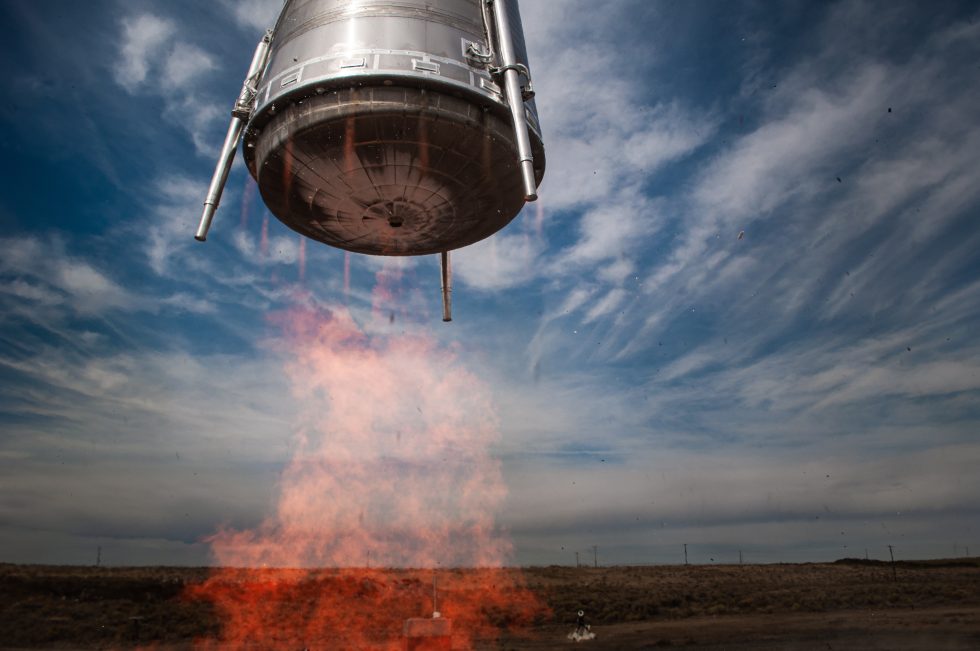
4 Stoke Space goes for broke to solve the only launch problem that “moves the needle” - Ars Technica
This piece’s subtitle is “Does the world really need a 151st rocket company?” - and that’s really the premise of it. Again, this is something I’ve been doing a bit of research on for work, and it’s interesting to see the evolution of rocket launch companies, all of which is happening in the shadow of SpaceX. What’s interesting about this startup, Stoke Space, is that it’s rockets are more reusable than SpaceX’s, whose upper stage is not reusable.
5 Everything that turned out well in my life followed the same design process - Henrik Karlsson’s Substack
Quite a lovely piece from Henrik Karlsson about Christopher Alexander’s “unfolding” design process. Instead of writing about it, I’ll just quote the first bit of the piece here:
If I look at things that have turned out well in my life (my marriage, some of my essays, my current career) the “design process” has been the same in each case. It has been what Christopher Alexander called an unfolding. Put simply:
- I paid attention to things I liked to do, and found ways to do more of that. I made it easy for interesting people to find me, and then I hung out with them. We did projects together.
- I kept iterating—paying attention to the context, removing things that frustrated me, and expanding things that made me feel alive.
- Eventually, I looked up and noticed that my life was nothing like I imagined it would be. But it fit me.
6 The Tangled Past and Unsettled Future of Greyhound Racing in West Virginia - Oxford American
Michelle Orange writes about greyhound racing in West Virginia, home of America’s last active tracks. Phew. I knew that Greyhound racing was a big thing of the past - but I didn’t know that there were still some tracks active along with a strong base of supporters. I don’t like the idea of keeping animals in captivity and for racing, but I found this essay intriguing.

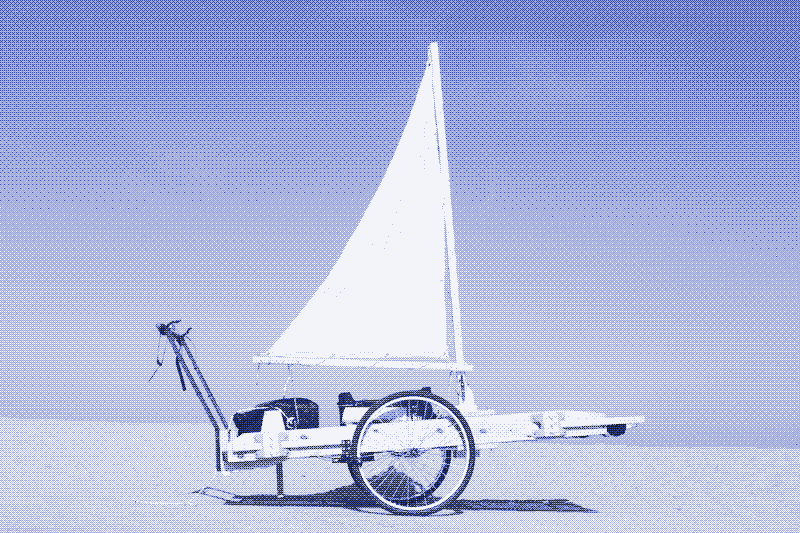
7 Rediscovering the Handcart - Low Tech Magazine
“A pleasure to drive, Low-tech Magazine’s handcart demonstrates the advantages of slow, human-powered transportation.”
Compared to some of the older pieces from Low Tech Magazine (Fruit Walls: Urban Farming in the 1600s in issue #210 and Direct Solar Power: Off-Grid Without Batteries in issue #330), this one I feel is a bit more whimsical. It’s about handcarts and how low-powered or human-powered carts can do a lot of heavy lifting. And you can even equip them with a sail!
8 The Secret, Magical Life Of Lithium - Noema
What a cool history lithium has had! I loved reading this article about this supposed-to-be-abundant-but-mysteriously-rare element.
9 Still Life - Texas Monthly
“Thirty-five years ago Dallas—and the country—was gripped by the tragic story of John McClamrock, a high school football player paralyzed during a violent tackle. But after the newspapers moved on, another story was quietly unfolding, one of courage, perseverance, and a mother’s fierce love.”
Oh lord. I read this 2009 piece last Saturday morning and couldn’t stop crying when I got to the middle and end of it. Sit down, give yourself 30 minutes to read it, and yup, keep some tissues at hand.
10 Language Birth - Asterisk Magazine
Since 1960, the world has lost hundreds of languages - but it’s gained thousands. This essay, by Karson Elmgren and published in the always-excellent Asterisk Magazine (I’ve shared 19 pieces from them!), talks about language disappearance and also the birth of new languages - whether “conlangs” (constructed languages) or specific lingo invented by groups of people (say, software engineers). Quite fun.
Perhaps it’s more accurate to say that linguistic diversity is not so much collapsing as radically transforming, with decimation on some dimensions coexisting with explosive growth on others. The losses are relatively uncontroversial, and have attracted wide attention with good reason. But the gains, I believe, are comparatively underappreciated, or even unfairly disdained, despite being of an arguably similar humanistic value.