Hello there, and welcome to another issue of your favourite newsletter, Kat’s Kable. As always, ten great things to read. I’m just back from my amazing trip to the US, and I enjoyed it immensely. I’m sufficiently de-jetlagged to be writing this at ~5pm on a Sunday - thank you melatonin! I spent a lot of time writing this issue as compared to usual issues - partly the jetlag, but also I feel I gave things a lot more thought and did a lot less multi-tasking. I hope it comes across in my commentary!
What I’m most excited about is that Kat’s Kable will turn ten years old in 10 days! What an incredible thing to think about, honestly. I think I may just embrace a bit of navel-gazing and write a “ten things I learnt from ten years of the Kable” piece to commemorate the tenth anniversary. Or is it a birthday?
Anyhow, that’s enough from me - enjoy this week’s reads and have a good week ahead.
1 Double Jump - Victory Journal
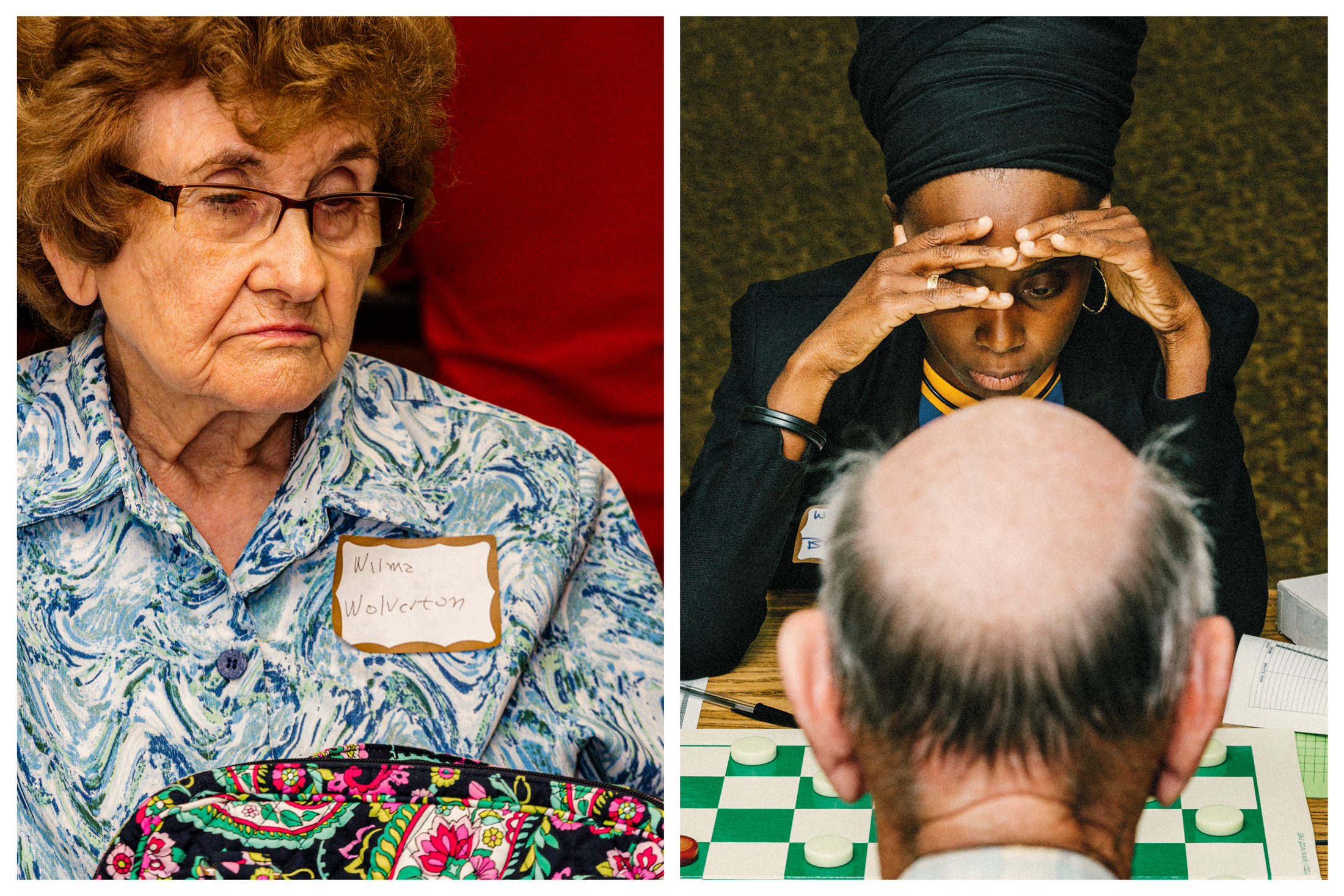
Victory Journal continues to be awesome. I didn’t know that checkers was played with so much aplomb. It is, in a sense predictably, in decline - but there is a group of die-hard players who congregate and play. The money isn’t huge, but the community is quite passionate. I learnt in this piece that there are multiple types of checkers you can play - and the “three-move” style is used often in tournaments and referred to as the purest form of the game, because it forces somewhat strange opening combinations and takes away the strategy of simply memorizing game combinations.
2 Reluctantly Influential: Inside Lenny Rachitsky’s Demandingly Chill Life - Review
This somewhat reminds me of the piece I shared about Dwarkesh’s podcast (Dwarkesh Podcast Progress Update) some time ago - but this one is different in the sense that it’s an interview + profile of the podcast host, Lenny Rachitsky. I again have this strange feeling sharing this piece because I’ve actually never watched a single episode of his podcast! But I loved the profile - especially the way it ties in the almost magically serendipitous steps that have gotten him from his startup to Airbnb to his podcast universe. So cool! Also the pictures of his home are just.. so cozy.
3 Systems Thinking is Brain Rot for Analysts - Blundercheck
I really, really enjoyed this. The premise of the piece is that the concept of “systems thinking” is a tempting thing to use for all problems across all types of fields or sectors, but that’s misguided. The thing I really loved, though, and which spoke to me the most was the concept of “analogical range”. Timber Stinson-Schroff talks about the analogical range being your biggest asset as an analyst, which is definitely true for my current role in a venture capital fund. And if you want this range to be wide, you need to stop flattening every single problem or scenario into your flat map.
4 Get inside your life - Sherry Ning’s Substack
This piece’s subtitle is “Do not be a spectator or a commentator on your life; instead immerse yourself fully in it.”, which obviously immediately caught my eye.
Amidst the pressure to record everything, I feel like the entire world has become a pretty dinner setup, and we’re all standing by, hungry yet afraid to dig in because we all think that documenting and sharing our memory of that moment matters more than getting inside our bodies and enjoying that moment from first-person-perspective in real-time.
5 The Sofa - Scope of Work
I’d previously shared On Factory Tours by Spencer Wright of Scope of Work, and I spoke highly of it. This one, where he talks about restoring an old sofa, is similarly compelling. It almost feels like a task that needn’t be done - Wright did buy a beat-up sofa that needed a lot of work, but somewhat like me, I feel anything that’s a project has a much larger appeal to him. I’m glad he did take this up, though, because the overall account of him doing this in his New York apartment with his kids in tow is a delight!
6 Plant Breeding Isn’t Easy - Ambrook Research/Offrange
Well, of course plant breeding isn’t easy, but how hard is it? Very! It’s also quite open-ended and random, but that’s just the nature of it. When I was in the US for grad school and had my own garden, I marveled at all the types of seeds you could order (what do you mean you could get a habanada, a habanero with no spice?). This piece talks about that, and even features farms whose seeds I’ve used (like Wild Boar Farms) - so obviously I was very happy reading it.

7 Acclaimed Physicist And His Daughter Are Burying Tiny Nuclear Reactors A Mile Underground - Forbes
Richard Muller is the guy who devised the modern method of carbon dating - which is what we use to determine the age of plant and animal remains. He now is working with his daughter, Elizabeth, to prove out an elegant solution to many of nuclear energy’s risks. If you drill a borehole, fill it with water, and put a nuclear reactor at the bottom, then you basically have a source of steam to run a turbine at ground level. Given the depth of the borehole, nuclear waste is not an issue - just pour concrete down once you’re done. Sounds cool but of course it has its risks, not least being effects on the Earth’s seismic system.
8 China and the Future of Science - Scholars Stage
Lots of China articles of late - China’s technology long game in issue #394, The Aluminum Tech Stack in issue #390, and more. This piece hits home a bit more for me, given that it’s about fundamental science research. China has moved from its primary goal being “we must make China rich” to “we must lead humanity through the next round of techno scientific revolution and industrial transformation”. Thus, the push to be world-leading on the globally relevant technologies today. Honestly a sobering read.
9 The AI Revolution Hollywood Feared Is Already Happening - Hollywood Reporter
“With no unions to slow the collision and scant regulation to cushion the aftermath, India has become the world’s most consequential live experiment in AI filmmaking — and the results may preview the future of cinema everywhere.”
Phew. I vividly remember reading this on an intercontinental flight a few weeks ago. The fact that I can remember this as standing out on a 16 hour flight means only one thing - it’s compelling and you should read it too!
As of now, India is becoming something nearly unprecedented in the history of the moving image: a vast, live experiment in what happens when one of the world’s most prolific film industries deploys the most disruptive technology since the advent of television, or the transition from celluloid to digital — with no unions to slow the collision and scant regulation to help with the aftermath. The results, for better and worse, might offer the rest of the global entertainment industry a preview of its own future: what is gained and what is lost when an art form built on human creativity and collaborative craft is supplanted by the output of machines.
10 The third wave of American philanthropy - Nan Ranshohoff’s Substack
This is actually really cool. If you combine just three things - the OpenAI Foundation, the Anthropic founders, and Anthropic employees, there will be soon about $40-100 billion dollars in philanthropic capital to give away each year. This is a large number, and it will require a new type of philanthropic capital allocation. Nan goes into this, and does a great job of the “what exists, what needs to exist, and what needs to be expanded dramatically” arguments, but I can’t help but also comment that this seems to be an… optimistic view of things? That all this capital will be used for good and useful things that help us cope meaningfully with our AI future? I don’t know honestly.