Hello there, and welcome to another week of the Kable. It’s been a pretty somber few days - I lost a friend this past week, and it’s been heavy. I will probably write more about it later, but it feels so cruel that someone so young is no longer with us. I’ve attended way too many funerals and cremations in the last twelve months.
The Kable has been a nice distraction - I spent a lot of time writing this issue partly just to get into a different zone for some time. Take care of yourself, and as always, enjoy the Kable.
1 Why Japanese companies do so many different things - David Oks’s blog
I’ve always been bewildered by the fact that Japanese conglomerates do so many things. You must have seen that meme about Yamaha which goes like
This particular piece goes into the company culture and history reasons for why this happens (which is really worth reading), and starts off with a different and more topical group: TOTO. TOTO is world-famous for its sanitaryware, and while we don’t see much of it in India, its everywhere in Japan and the US. What’s taken a lot of people by surprise in the past few months is the fact that TOTO also makes these electrostatic chucks without which modern computer memory cannot be made!
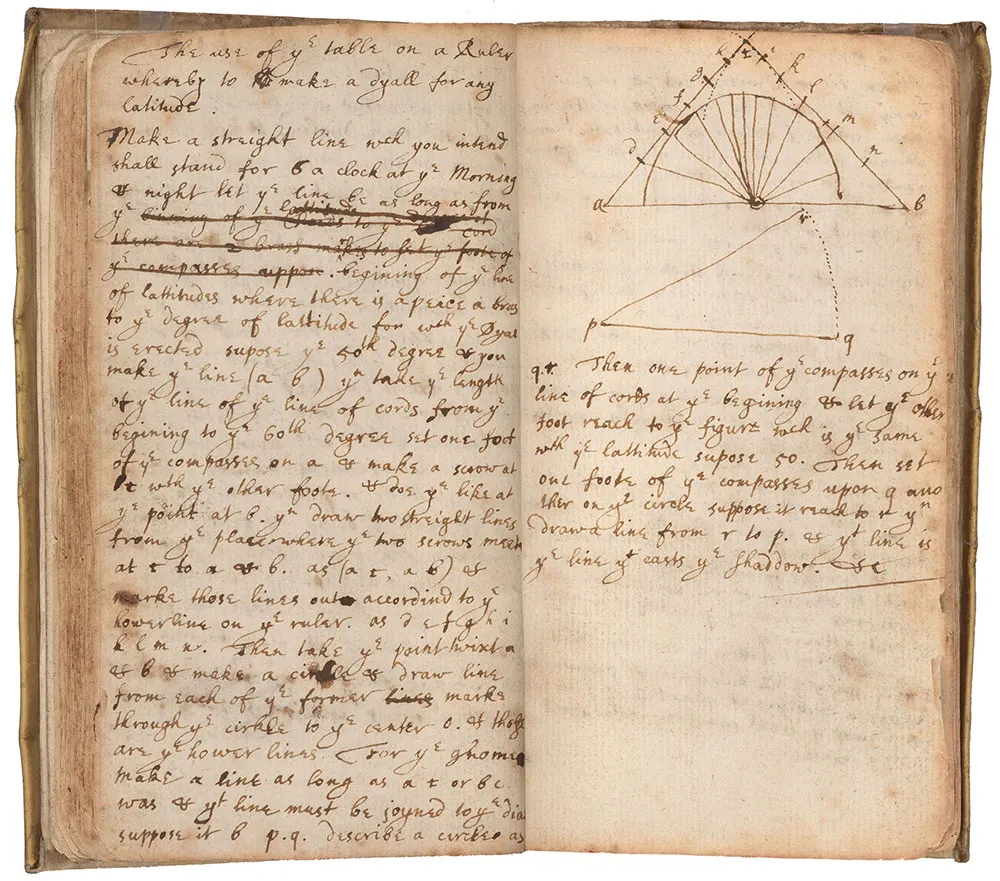
2 A Brief History of Lab Notebooks - Asimov Press
“How experimental recordings have changed, from the Renaissance through today.”
So lovely! You know, this reminds me of something I read recently - we want to automate the process of scientific discovery using AI (e.g. see We Must Know, We Will Know in #392) but we just don’t have any negative data - we know about published work that says “hey! this works” but we really don’t know about “yooo this doesn’t work”.
This piece about lab notebooks is cool because it sheds some “BTS” light into historical scientific discovery, and the lab notebook also serves as a semi-private/semi-public space where the negative results can be recorded.
3 What’s Inside a Contactless Credit Card - Lumafield
I’ve enjoyed sharing pieces from the Lumafield blog, and honestly I have to stop myself from sharing them all at once. They’re an industrial CT scan company and they do CT scans of everyday objects (the last one I shared was of plastic bottles - Evolution of the Plastic Bottle in issue #378). This one is about contactless credit cards, which are so cool???
If you liked it, you might also like Inside the tiny chip that powers Montreal subway tickets (issue #341).

4 Consider the Sister - The Small Bow
“Amy Wallace has spent two decades guarding the human her brother was—against a world that prefers David Foster Wallace as a puzzle.”
Phew. It’s always a heavy topic when you discuss DFW’s legacy, and especially when it comes from someone like his sister - who also wanted to become a writer and then didn’t.
5 ‘Will Grief Destroy My New Marriage?’ - The Cut
I’ve loved reading “Ask Polly”, Heather Havrilesky’s advice column, see also ‘Why Do My Friendships Always Fade Away?’ (issue #224) (‘I Live With My Parents and I’m Miserable!’ (issue #171).
This one is pretty heart-wrenching - the author is recently married, her brother died just after her wedding, and she’s been unable to start her marriage off on a good note because she’s afraid of tangling it up with family baggage. Polly’s response is so nice - accept that we are humans are broken in some ways but always lovable, and be honest with the ones you love because that’s how you bring them into your circle.
6 How American Dads Became the Parents Their Fathers Never Were - Derek Thompson’s Substack
Quite an interesting essay - “Compared to their parents, Millennial fathers have roughly tripled the amount of time they spend with kids. The new American dad is more present and more exhausted—but also, more satisfied with life.” It also reminded me of The biology of dads which I’d shared in issue #257. OK, not really - it didn’t remind me of that! But my cool Kable archive plugin reminded me ;)
7 A Journey By Sail In Search Of Zero-Emissions Cargo - Noema
The return of sailships! I thought this was just a quaint thing, but no, not really - these things can actually do transatlantic voyages, and they are profitable and economically sound enterprises when the cargo is high-value - think coffee and cacao from Latin America, wine from France/Spain, Caribbean rum and such. This piece by Julian Sayarer is him recounting his experience on the Tres Hombres, a sailship at the vanguard of a smaller, less intensive way of oceanic shipping. It’s a lovely and optimistic account.

8 Playing Doc’s Games—I - The New Yorker
This is possibly the best thing I’ve read all year. It took me a while - an hour+, but I was engrossed. William Finnegan is a staff writer at the New Yorker, and this one is a profile-of-sorts of Mark Renneker, aka “Doc”. Doc is a family-practice physician but much better known as a patron saint of surfing in the San Fransisco area, and he had an outsized influence on pretty much everyone in his orbit. Phew - he’s a crazy surfer, and Finnegan is a surfer too, so that’s pretty much all this piece is about. I felt sad at the end because it was done.. but it turns out this was just part 1?!
But this metaphor is about mood and memory, not about the waves themselves, which dance to an infinitely more complex tune. To someone sitting in the lineup trying to decipher the structure of a swell, the problem can, in fact, present itself musically. Are these waves approaching in 13/16 time, perhaps, with seven sets an hour, and the third wave of every second set swinging wide in a sort of minor-chord crescendo? Or is this swell one of God’s jazz solos, whose structure is beyond our understanding? When the surf is very big, or in some other way humbling, such questions tend to fall away. The heightened sense of a vast, unknowable design silences the effort to understand. You feel honored simply to be out there. I’ve been reduced on certain magnificent days to just drifting on the shoulder, gawking at the transformation of ordinary seawater into muscled swell, into feathering urgency, into pure energy—impossibly sculpted, ecstatically edged—and, finally, into violent foam.
9 Pearls Before Breakfast: Can one of the nation’s great musicians cut through the fog of a D.C. rush hour? Let’s find out. - The Washington Post
I remember reading about this when I was in school, possibly in one of the self-help-y books I read at that time. Joshua Bell, the violinist of our generation, busked at one of the most busy public transit stations of Washington D.C., and had a tiny audience, and about $30 for 40 minutes of playing. What a cool sociological experiment - he’s the same guy for whom people will pay $100+ for a ticket, but won’t stop and listen when it’s anonymous and for free.
10 Ellen Bass’ “Wildlife” - Ordinary Plots
Devin Kelly’s newsletter, Ordinary Plots, is all kinds of lovely. He takes a poem each week and talks about how it moved him, and why it spoke to him in that particular time of life. I’m a fan of Ellen Bass (my favourite is probably “The Thing Is”), and I jumped to it when Kelly wrote about a more recent poem of hers. It’s very enjoyable and hopeful.