Hello and welcome back. It’s nearly been a year of Kat’s Kable, woohoo! I might do something special next week but for now, here goes.
1
The Great Chain of being Sure about Things
A nice introduction to the new and upcoming technologies of the blockchain and cryptocurrencies, such as bitcoin and ethereum. These are things that will only increase in relevance as time goes on, and it’s important that we know about how they work.
2
What Mormon Family Trees tell us about Cancer
“By searching the church’s famed family trees, scientists have tracked down a cancer-causing mutation that came west with a pioneer couple—just in time to save the lives of their great-great-great-great grandchildren.” Also interesting - The Deseret Alphabet, a 38-letter writing system developed by Mormons.
3
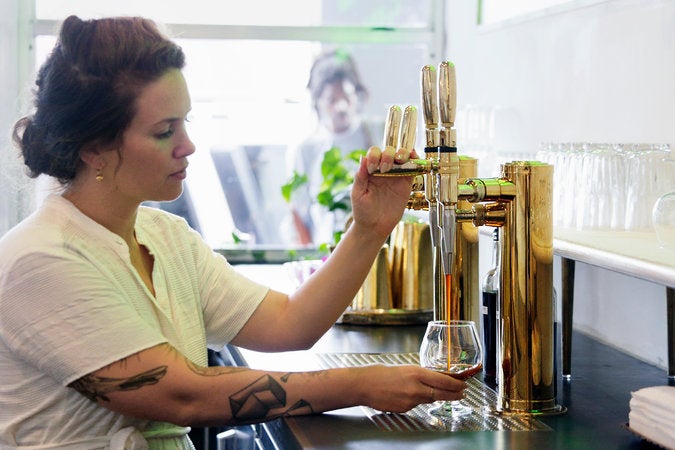
How Cold Brew Changed the Coffee Business
Cold Brew coffee is brewed very differently from normal coffee, and therefore it is important to know when the demand for the iced drink will spike. And then there’s a nitro cold brew, which infuses the cold coffee with some nitrogen to infuse some fizziness and make it more creamy.
4
Supertasters among the Dreaming Spires
A deep look into how wine tasting works - this is a story of the people involved in the Oxbridge (or Oxford vs. Cambridge) wine tasting championships. The two teams have differing motives; one is involved in a rigorous search for perfection where the other just wishes to enjoy the drink better.
5
What Makes us Happy?
There’s a long-running study of happiness that is still running, and this is a story about it. It encompasses 268 people who were sophomores at Harvard in the 1930s. It is still running, and it’s matured as the years have gone on. The findings are very interesting, I’ll leave you with one.
The study has yielded some additional subtle surprises. Regular exercise in college predicted late-life mental health better than it did physical health. And depression turned out to be a major drain on physical health: of the men who were diagnosed with depression by age 50, more than 70 percent had died or were chronically ill by 63. More broadly, pessimists seemed to suffer physically in comparison with optimists, perhaps because they’re less likely to connect with others or care for themselves.
6
The Strange Brain of the World’s Greatest Solo Climber
Alex Honnold does climbs that we wouldn’t dream of ever attempting, and he does them without ropes or safety equipment. His unending pursuit of daring adventures led scientists to examine his brain - did he not have an amygdala at all, the small almond-shaped organ in the brain responsible for fear? The findings are not very surprising - he does not experience fear like the rest of us do. But it is a combination of both nature and nurture; years of climbing challenging trails has led him to control and condition his fears.

7
Power Causes Brain Damage
While we’re on the topic of brains and brain studies, here’s a piece that says that being in power causes brain damage. Leaders start to lose their more nuanced skills as they become drunk on power and having their word unequivocally obeyed.
The historian Henry Adams was being metaphorical, not medical, when he described power as “a sort of tumor that ends by killing the victim’s sympathies.” But that’s not far from where Dacher Keltner, a psychology professor at UC Berkeley, ended up after years of lab and field experiments. Subjects under the influence of power, he found in studies spanning two decades, acted as if they had suffered a traumatic brain injury—becoming more impulsive, less risk-aware, and, crucially, less adept at seeing things from other people’s point of view.
8
Liberal Arts in the Data Age
Came across this in a discussion with friends, and it brings up some nice points. The webpage title is “Arts Majors are the Future of the Tech Industry”, which is imo a blatant exaggeration. However, bringing technologies to the public has become easier than ever, with even complex web services now easy to build and scale. (And nobody knows how neural networks work either).
9
The Toilet of the Future
Yet another article from Mosaic - these guys are amazing. “Traditional flush toilets aren’t an option in many parts of the world, but neither is leaving people with unsafe and unhygenic choices. Now, one company is piloting a new loo that’s waterless, off-grid and able to charge your phone. Lina Zeldovich travels to Madagascar to witness the start of a lavatorial revolution.”
10
Social Media and the Great Recipe Explosion
As true an example of globalisation as ever; recipes from one point can spread to another in the matter of minutes now via Instagram and Pinterest.
During the 12 years she has been at Sainsbury’s, Richards has noticed big changes in the foods people choose. “Customers are acting much more erratically than they were before.” […] Overall, expectations of a dish have become much more demanding. The person who buys a ready-made lasagne may never have cooked lasagne at home, but maybe they have seen Giorgio Locatelli cook one on TV and this “changes the benchmark” for what they expect from a recipe.
Feel free to write back! If you received this email from a friend and if you like what you see, subscribe here. Have a great weekend and a great week ahead. :)